What Rice Does Instead of an Egg
The secret comes down to one thing: starch. When rice simmers gently in hot milk, the grains swell and release amylose, which thickens the liquid. This gelatinization gives body to the base in the same way an egg yolk would in a classic ice cream. In other words, rice acts as the binder, eliminating the need for eggs entirely.
This technique is well known in Italy. Sicilian gelato often forgoes eggs by using cornstarch, and Florentine gelato di riso relies on Arborio rice. By trapping free water, the rice starch also limits the formation of large ice crystals, which explains the smoother mouthfeel.
The remaining creaminess comes from whole cream at 30% fat, which provides richness and a soft mouthfeel. Sugar lowers the freezing point, preventing the ice cream from becoming a rock-hard block. This isn’t a new invention: rice-based frozen desserts have a long history, related to gelato di riso and Indian kulfi.
Ingredients for Rice Ice Cream
- 120 g short-grain rice
- 1 L whole milk
- 120 g light brown sugar
- 2 vanilla pods (or 2 tsp natural extract)
- 1 pinch of salt
- 25 cl heavy cream (minimum 30% fat)
Steps: From Rice Pudding to Ice Cream
- Start with a quick rinse of the rice under cold water to remove surface starch.
- In a large saucepan, combine the drained rice, milk, sugar and salt. Split the vanilla pods lengthwise, scrape out the seeds and add both seeds and pods to the milk.
- Heat very gently, just below a simmer, and let the rice soften for 35–40 minutes, stirring occasionally, until the mixture is thick and creamy.
- Off the heat, remove the vanilla pods and let the mixture cool slightly. Add the well-chilled cream and blend thoroughly with a hand blender until no grain remains.
- Cover and chill the base in the refrigerator for at least two hours.
- If you have an ice cream maker, churn until the mixture reaches a soft, ribbon-like consistency. If you don’t, spread the base in a wide, shallow dish and stir with a fork every 30 minutes for about 3 hours to break up ice as it forms.
No Ice Cream Maker? The Fork Trick to Prevent Crystals
This technique is crucial when you don’t have a machine. Place the chilled base in a flat, wide container, which speeds freezing at the edges. Every 30 minutes, remove the container and vigorously break up the frozen layer with a fork, folding the edges toward the center. Repeat for about 3 hours, roughly five or six times.
The goal is to control crystal size. Without agitation, water forms large crystals that make the ice cream crunchy. By regularly breaking the mass you fragment those crystals and incorporate some air, yielding a smoother result. Don’t expect the exact lightness of a churned gelato—the homemade texture will be slightly denser but still pleasant.
For storage, expect optimal texture for about 1 to 2 weeks in an airtight container with plastic wrap pressed onto the surface. After that, freezer taste can develop since this recipe contains no stabilizers. Remember to let the ice cream sit a few minutes before serving so it softens slightly.
Variations and Serving Suggestions
The vanilla base is just a starting point. Whisk in a spoonful of matcha for a subtly bitter green version, or replace part of the milk with coconut milk and cream for a tropical twist. Black sesame ground into a paste also makes an intriguing, nearly gray ice cream with a toasty flavor.
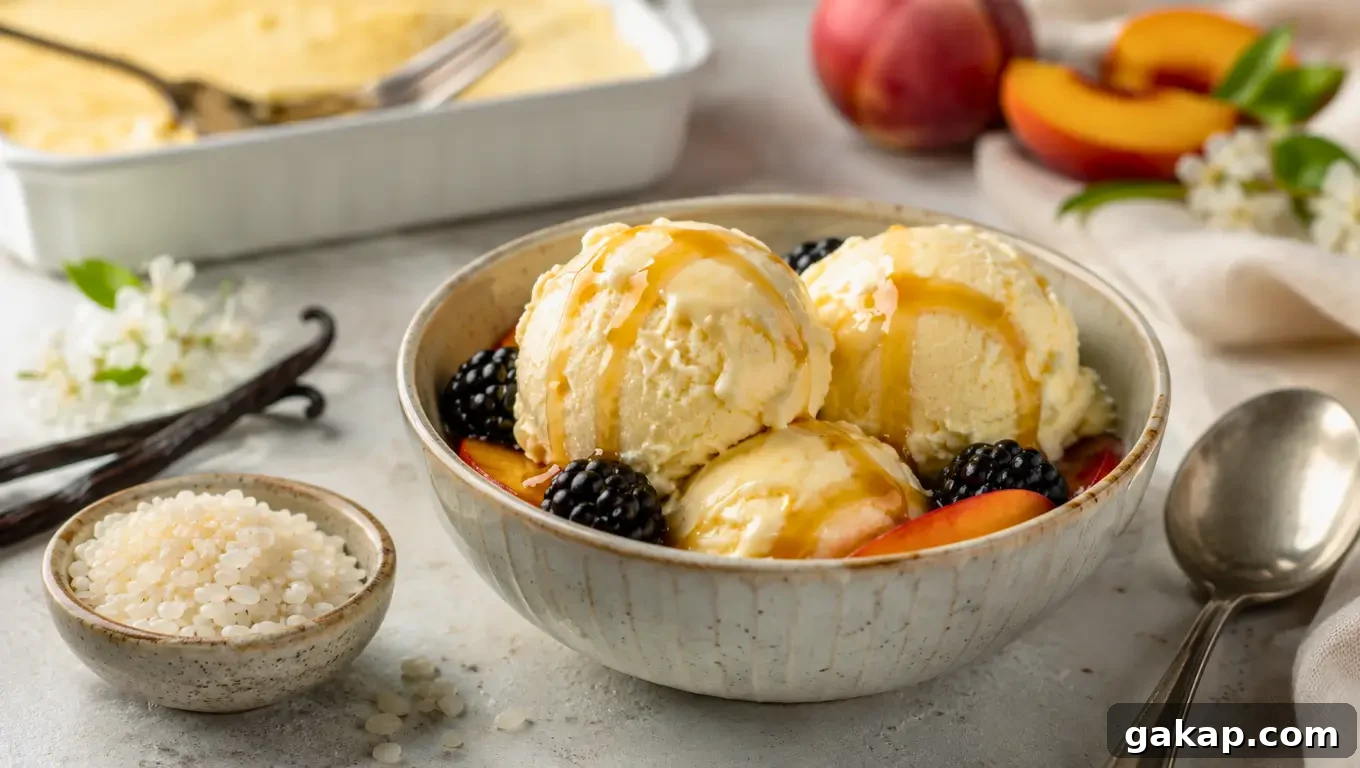
When serving, a drizzle of caramel always works well. In summer I prefer pairing the ice cream with seasonal fruits: quartered figs, nectarine slices, or blackberries that burst on the tongue. It’s a simple way to enjoy homemade frozen dessert without buying a machine.