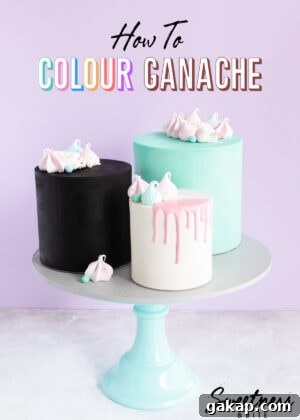
Learn how to ganache a cake with this step-by-step tutorial — including how to make ganache for covering a cake, chocolate ganache ratios, how to use acrylic ganache boards for perfect straight sides and sharp edges, plus tips and tricks to get consistent results.
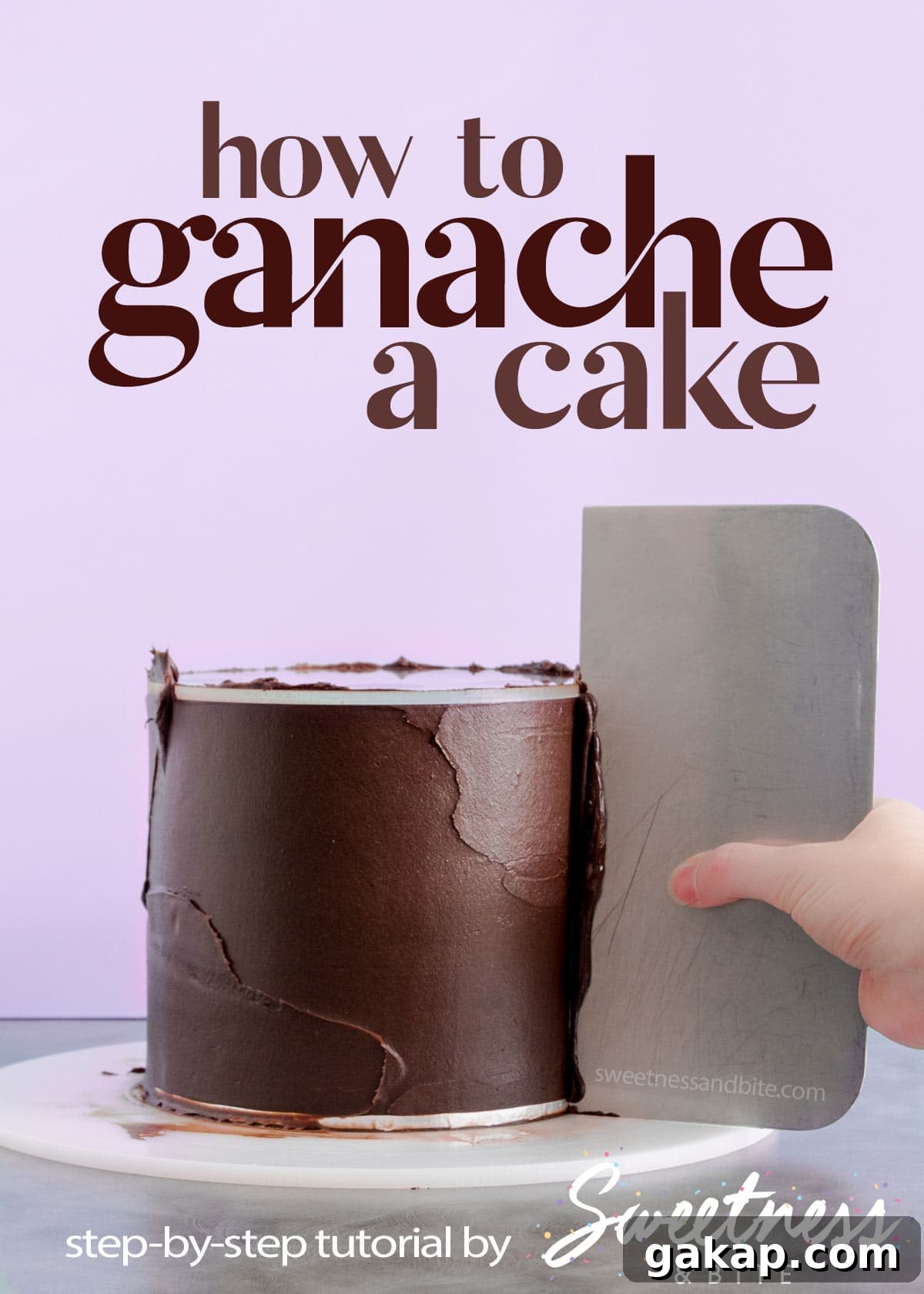
Ganache can transform the look and structure of a cake — creating sharp edges and smooth, stable finishes. It can also be frustrating the first few times you try it. This guide walks you through the process I use to get reliable, professional results.
If you’re new to ganaching, read through the whole tutorial first, then gather the tools and practice. There’s also a follow-up Ganache FAQ for common questions.
Why Use Ganache on a Cake?
Ganache offers excellent stability compared with buttercream when made with the right chocolate-to-cream ratio. Properly made ganache sets firm at room temperature, so it doesn’t always need refrigeration and won’t cause fondant to “sweat” as a chilled cake comes back to room temperature. That makes it especially useful when you plan to cover a cake in fondant or need long-lasting, neat edges.
Two keys to great ganache work are: using a second board (a ganache board) on top of the cake while smoothing the sides, and getting the ganache to the right consistency for the task.
About Acrylic Ganache Boards
Ganache boards are clear or solid acrylic discs the same size as your cake board. You place one on top of the cake and use a scraper pressed against both boards to remove excess ganache, resulting in straight sides and a crisp top edge. If you don’t want to buy acrylic boards right away, a second cardboard cake card the same size will work for practicing this technique.
When buying boards, check the measurements so the top board and bottom cake board match. Some boards are slightly larger (e.g., 6.25″ vs 6″), so match whichever format you prefer.
Please note: images from this post are sometimes used by online retailers without permission. I don’t endorse products shown unless explicitly stated.
Ganache Consistency for Covering a Cake
Consistency is subjective, but it’s crucial. I typically use a firmer ganache for filling and a slightly softer one for coating. Two common target consistencies are: peanut-butter-thick for filling and a softer, Nutella-like texture for the outer coat. With a few cakes you’ll learn which firmness you prefer.
How To Make Ganache for Cake Decorating
Ganache requires two ingredients: chocolate and cream. The ratio of chocolate to cream determines how firmly the ganache sets — more chocolate gives a firmer ganache.
Types of Chocolate For Ganache
You can use couverture (real chocolate made with cocoa butter) or compound chocolate (made with vegetable oils). Couverture usually tastes better; compound chocolate can give a more stable ganache. Many decorators blend the two for flavor and stability. Use a good-quality chocolate you like the taste of when possible.
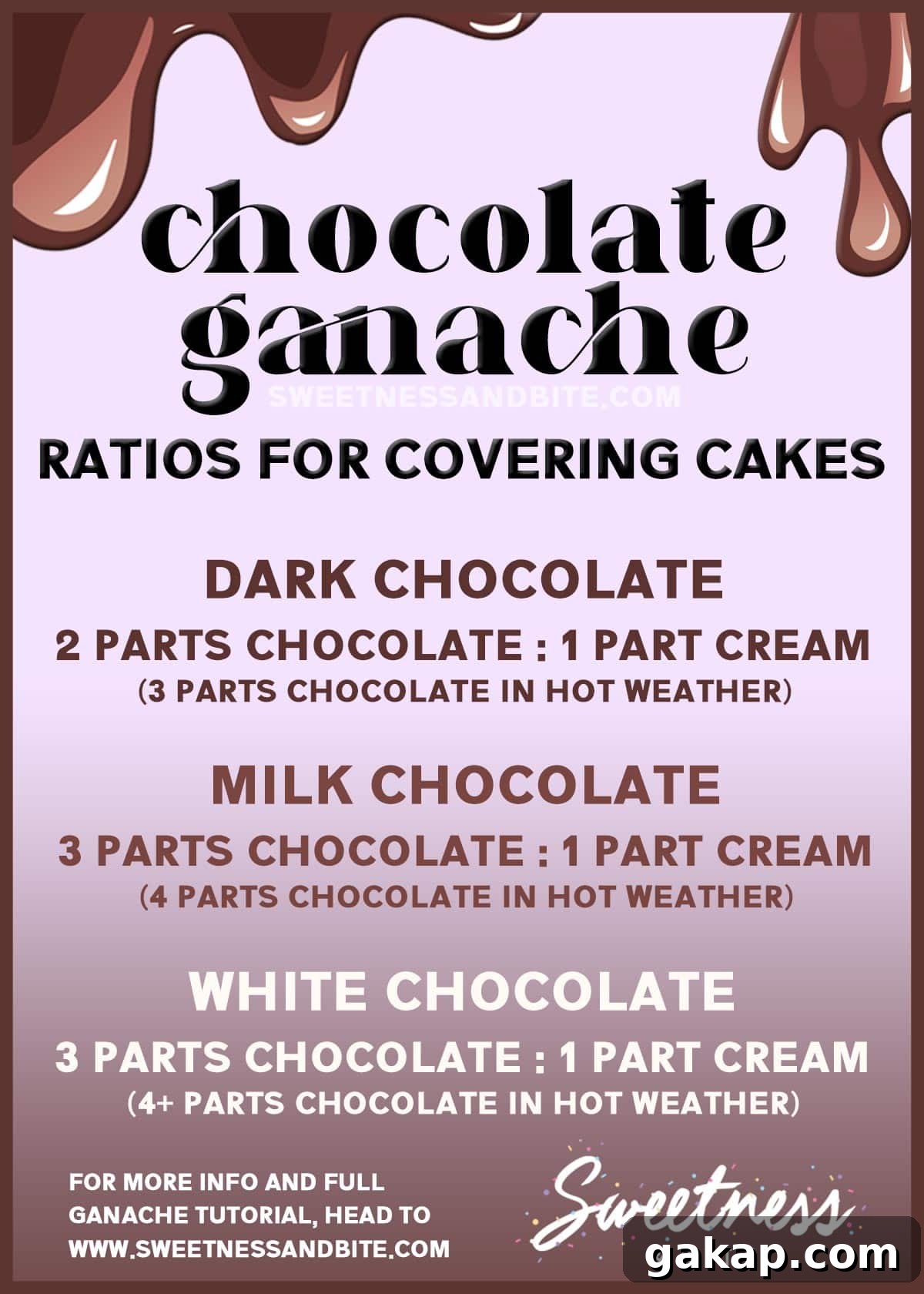
Ganache Ratios for Cake Decorating
Dark Chocolate (50–60% cocoa): 2 parts chocolate : 1 part cream. In warm weather increase to 2.5–3 parts chocolate.
Milk Chocolate (≈30% cocoa): 3 parts chocolate : 1 part cream. In cool weather 2.5 parts may be fine; in hot weather increase toward 3.5–4 parts.
White Chocolate: 3 parts chocolate : 1 part cream; increase to 3.5–5 parts chocolate in warmer conditions to achieve a firm set.
How Much Ganache Will I Need for My Cake?
Use a ganache calculator (many are available online) to estimate the total grams of ganache required for your cake size and layer count. Once you have the total ganache weight, divide by the total parts in your chosen ratio to calculate chocolate and cream amounts.
Example: for approximately 1500 g total dark ganache (2:1 chocolate to cream), total parts = 3. Divide 1500 g by 3 = 500 g (cream). Chocolate = 500 g × 2 = 1000 g. So 1500 g ganache = 1000 g chocolate + 500 g cream.
Chocolate Ganache For Cake Decorating
Ingredients
Dark Chocolate Ganache
- 2 parts chocolate
- 1 part cream
Milk Chocolate Ganache
- 3 parts chocolate
- 1 part cream
White Chocolate Ganache
- 3 parts chocolate
- 1 part cream
Instructions
- Chop the chocolate finely so pieces are about ½ inch or smaller.
- Weigh the cream into a saucepan, heat over medium-high until it just reaches a simmer and bubbles cover most of the surface. Watch closely to avoid boiling over. Remove from heat and let the bubbles settle.
- Add the chopped chocolate, gently shake the pan so the chocolate is covered, and let it sit for a few minutes without stirring.
- Stir gently with a spatula or whisk until smooth. For dark ganache you can use a whisk; for other types a spatula works well.
- If lumps remain, return to very low heat and stir constantly until smooth. A stick blender can help emulsify if needed.
- Pour ganache into a microwave-safe bowl if desired, cover the surface with cling film, and allow to set at room temperature (overnight is ideal).
- To speed setting, chill in the refrigerator, stirring every 10 minutes so it cools evenly.
- Store ganache at room temperature for a few days, refrigerate for up to a month, or freeze for longer. Adjust based on ingredients and storage conditions.
Notes
Adjust chocolate amounts according to weather to achieve the right set. Use a ganache calculator for total ganache volume, then apply your chosen ratio to calculate chocolate and cream.
Cream: use pourable, unsweetened cream around 35% fat (heavy or whipping cream in many countries).
If ganache splits (appears dull, grainy, or oily), try blitzing with a hand blender, adding a splash more cream and mixing, or chilling and stirring periodically until it re-emulsifies.
Once your ganache has set, you’re ready to ganache the cake. The following section covers a practical, step-by-step approach for round cakes — the method works for square cakes too with more attention at the corners.
How to Ganache A Cake
What you’ll need:
- Your baked and cooled cake layers
- Prepared ganache (set to the appropriate consistencies)
- Two cake boards the same size (or one cake board + one acrylic ganache board)
- 90° angled cake scraper (metal, acrylic, or rigid plastic)
- Baking paper (parchment)
- Offset spatula
- Pencil & scissors
- Cutting board and serrated knife or cake leveller
- Turntable
- Setup boards or large masonite boards to protect your workspace
- Non-slip mats (one between turntable and setup board, one under the cake board)
- Spirit level
Label the top board “ganache board” if using a cardboard substitute so you don’t confuse it during flipping steps.
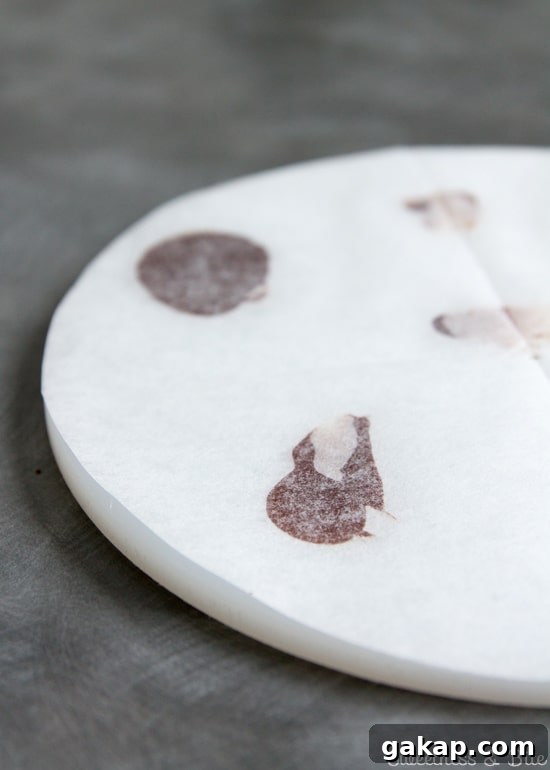
Trace the ganache board onto baking paper, cut and attach the circle to the ganache board with a few dabs of ganache, and chill to set. This sheet will make removing the top board easy later.
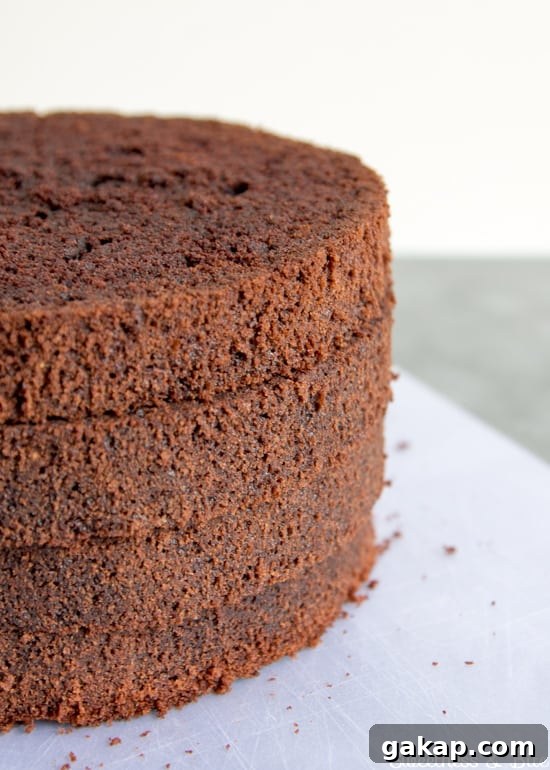
Trim and level your cake layers, then stack them with ganache or your chosen filling. Aim for even filling layers and check alignment by eye level, adjusting or trimming any overhanging cake to avoid bulges.
Lightly chill the stacked cake so the filling firms slightly. Warm your ganache to a peanut-butter consistency for the sides. Place the prepared ganache board on top, press gently to center, then refrigerate briefly with a light weight on top to settle layers.
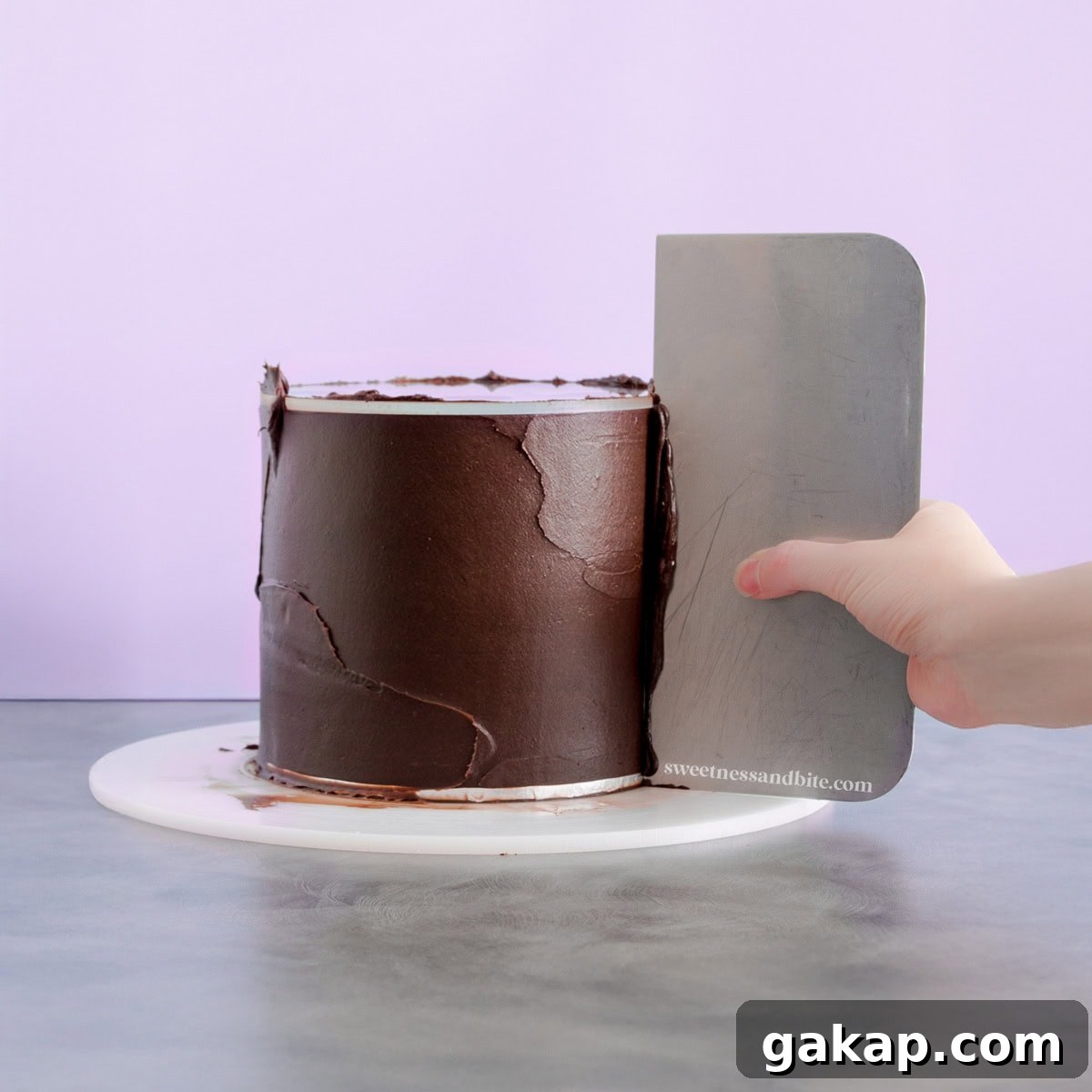
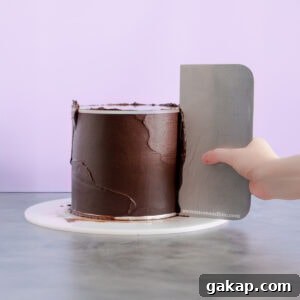
Apply a thick layer of ganache around the sides, extending past the cake boards. Hold the scraper so it rests against both boards and rotate the turntable to remove excess ganache. Return excess ganache to the bowl, rinse and dry your scraper, and repeat until the sides are smooth.
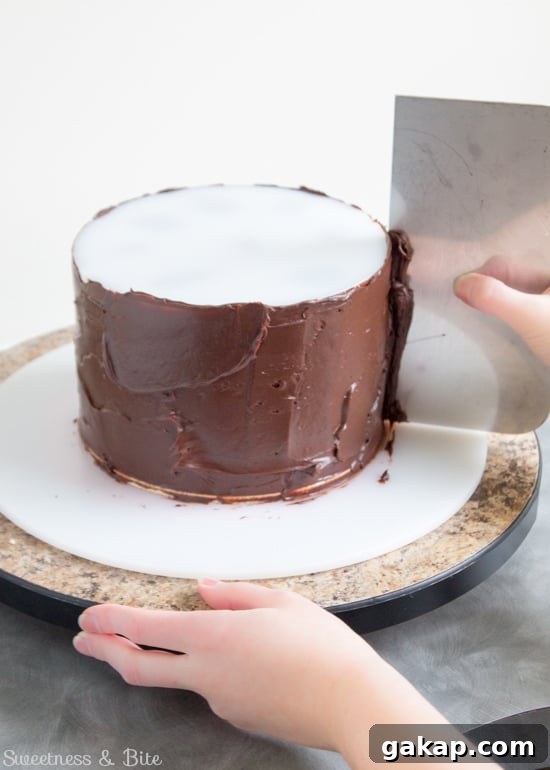
Chill the cake until the ganache is firm. Slide a spatula between the ganache board and baking paper to lift the top board off, then remove the paper circle.
Warm ganache to a softer Nutella-like consistency for the top. Spread a thick layer on the top, smooth it slightly so it goes over the edges, place baking paper over the top, then place another board and flip the cake carefully. Use a spirit level to press the cake until level and ganache squeezes out slightly.
Scrape the excess from the flipped cake edges with a warmed scraper held straight to preserve sharp sides. Chill again until firm. Flip the cake back, remove baking paper, fill any gaps, and smooth the top. Warm a spatula and finish smoothing any small imperfections. Allow the ganache to fully set before decorating or covering with fondant.
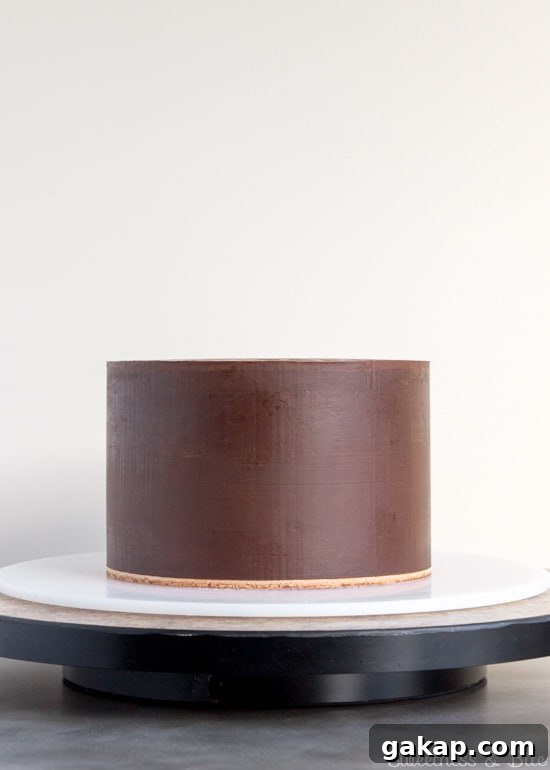
How to Store a Ganache-Covered Cake
Storage depends on fillings and climate. A ganache-covered cake does not require refrigeration unless filled with perishable ingredients (fresh fruit, compote) or if ambient temperatures are very warm. In most cases, store at cool room temperature in a cake box or covered container to keep dust and pests away. If you do refrigerate, bring the cake back to room temperature before covering with fondant to avoid condensation.
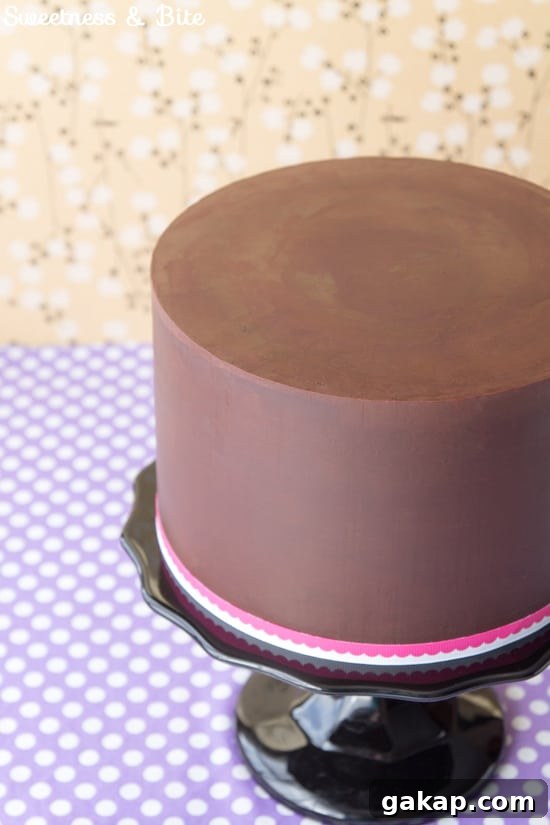
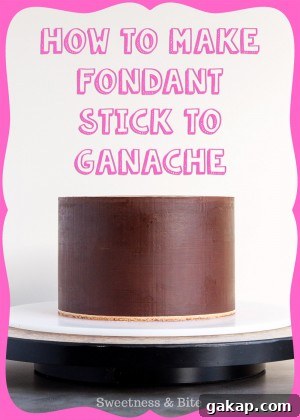
Once your ganache is set you can either cover the cake in fondant or add further decorations. If you have questions about making fondant adhere to ganache or troubleshooting split ganache, consult a ganache FAQ or experiment on a small practice cake.
I love seeing what you create! Tag me in your cake pictures or videos on Instagram or Facebook so I can see. — Natalie
You Might Also Like…