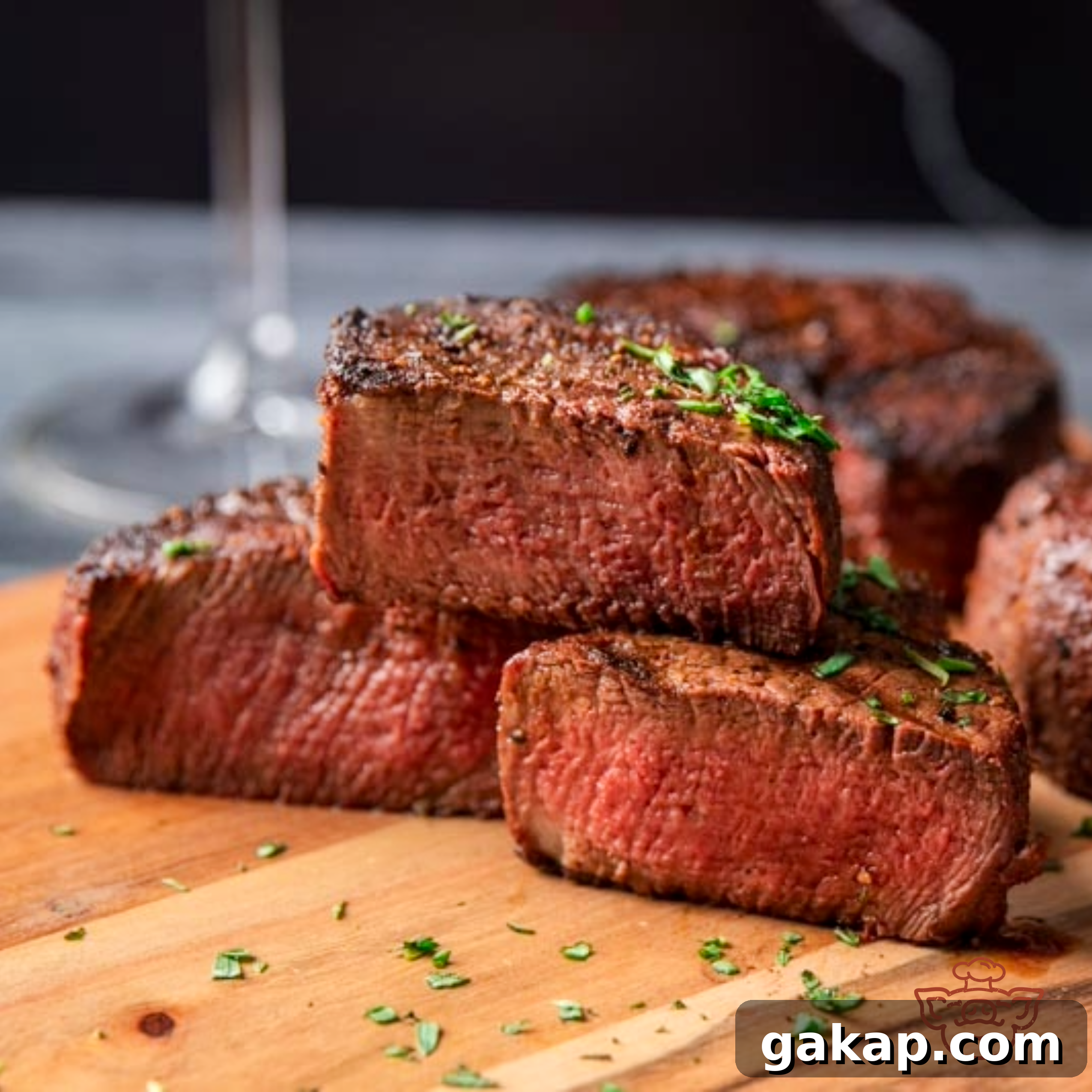
Welcome back and happy New Year. One of the questions I get asked most often is how to achieve a steakhouse-quality finish on a thick-cut steak. This guide explains exactly how to grill the perfect filet mignon on the Big Green Egg.
Filet mignon is celebrated for its tenderness, but its leanness makes it easy to overcook. Whether you’re cooking an American Wagyu cut or a choice-grade filet from your butcher, technique is the decisive factor.
Here you’ll find a precise, two-zone cooking approach that produces a deep, crusty sear and a uniformly pink interior. Using the Big Green Egg’s excellent heat retention, you can confidently master this delicate, lean cut.
Pour a glass of Cabernet, relax, and follow this step-by-step guide to grill a world-class filet mignon.
Why the Big Green Egg is Ideal for Filet Mignon
Thick filets benefit from two types of heat, and the Big Green Egg handles both exceptionally well:
- Radiant heat: The ceramic walls retain and radiate heat, acting like a high-end convection oven to cook the steak gently and evenly.
- Direct sear: When you open the vents, the Egg quickly reaches the high temperatures needed for a fast Maillard reaction to form a rich crust.
The Key: Two-Zone Grilling
Two-zone grilling creates a hot side for searing and a cool side for finishing. That separation prevents the exterior from burning while the interior reaches the desired doneness, producing the tender, edge-to-edge texture that makes filet mignon exceptional.
Step 1: Selecting the Right Cut
For this recipe I used 6 oz American Wagyu filets. American Wagyu blends Japanese Wagyu genetics with American breeds, delivering pronounced marbling and rich, buttery texture alongside familiar beefy flavor.
These were Gold Grade, scoring 9 or higher on the Beef Marbling Scale. For comparison, a typical USDA Prime steak usually scores around 4 or 5.
Choosing a Great Filet Locally
This method works with any filet mignon. When shopping, prioritize these three factors:
- Thickness: Choose steaks that are 1.5 to 2 inches thick. Thinner steaks cook too quickly, making it hard to get a good sear without overcooking the center.
- Grade: If possible, choose USDA Prime for the best marbling. If you select Choice, pick the steak with the most white flecks of fat.
- Appearance and feel: The meat should be firm and a bright red. Avoid packages that look overly wet or greyish.
Note: Leaner filets cook faster than heavily marbled cuts. Since fat insulates, a lean steak will reach target temperature sooner — start checking early.
Step 2: Tempering and Surface Prep
Never put a cold steak on a scorching grill. Tempering brings the meat closer to room temperature, helping it cook evenly.
The One-Hour Rule
Remove filets from their packaging about one hour before cooking. Tempered meat heats more evenly; putting a chilled center on a hot grill often leads to an overcooked exterior and an undercooked middle.
Dry the Surface
Pat the steaks dry with paper towels on all sides. Surface moisture prevents a fast, even sear because the grill must evaporate water before browning can occur.
A dry surface yields a mahogany, professional-looking crust quickly while preserving interior juices.
Step 3: The Binder and Seasoning
After drying, apply a light binder so the seasoning adheres and the surface transfers heat efficiently.
Apply a Binder
Brush a small amount of olive oil on each filet — just enough to help the rub stick. Alternatives like a thin coating of Worcestershire sauce or melted tallow both work and add extra umami.
Choosing Your Seasoning
A simple salt-and-pepper approach is excellent, especially with richly marbled beef. For a more complex crust, use a steak rub suited to high heat. If making your own, try a basic mix of kosher salt, coarse black pepper, garlic powder, and a touch of onion powder. Add dried thyme or rosemary if you’d like an herb note.
Season generously, including the sides, since these steaks are thick and need flavor on every surface.
Step 4: Setting Up Your Two-Zone Environment
While the steaks temper and absorb seasoning, prepare the Big Green Egg for two-zone cooking: one side for direct searing and the other for indirect finishing.
What is Two-Zone Grilling?
Two-zone grilling separates direct, high heat from a cooler, indirect area. This control lets you form a deep crust on the hot zone, then move the steak to the cool side to finish without burning the exterior.
How to Configure Your Egg
You can create two zones several ways: use an EGGspander rack with a half-moon convEGGtor stone for a clear indirect side, bank charcoal to one side with a kick ash basket, or pile coals higher on one side and shallow on the other if you don’t have inserts. A ceramic barrier provides the most consistent separation.
Target Temperature
Stabilize the Egg at 400°F to 450°F — hot enough to sear effectively but manageable for the indirect finish.
Step 5: The Sear
With the Egg stabilized and grates preheated, it’s time to sear.
Prep the Grate
Oil the cooking grate lightly with a paper towel dipped in vegetable or grapeseed oil held by tongs. This helps the steaks release cleanly and supports attractive grill marks.
Commit to the Heat
Place the filets on the direct side over open coals. You should hear a strong sizzle immediately.
- Timing: Sear about 2 to 3 minutes per side for a thick filet.
- Focus: At this stage concentrate on developing a deep mahogany crust — the Maillard reaction — rather than internal temperature.
- Space: Don’t crowd the grate; leave room for heat circulation.
Pro tip: Keep the dome closed as much as possible. The Egg cooks with radiant heat; opening the lid frequently causes temperature swings and flare-ups from dripping fat.
Step 6: The Slide and Slow Finish
After the crust forms, move the steaks to the indirect side to finish gently. This is where the two-zone method shines.
Cooling the Jets
Transfer the filets to the indirect zone and close the vents down. If you are finished, shut vents nearly fully to let residual ceramic heat finish the steaks while starting to extinguish the coals. If you’re cooking more, close them about 90% to keep coals alive but reduce intensity.
The Final Roast
Let the filets roast indirectly for 5 to 10 minutes, allowing heat to penetrate the center without charring the exterior.
Target Internal Temperatures
Use an instant-read thermometer and pull steaks at the appropriate internal temperature; carryover will raise the temp slightly during rest.
| Desired Doneness | Pull Temperature | Final Temp (After Rest) |
| Rare | 120°F | 125°F |
| Medium-Rare | 125°F to 130°F | 135°F |
| Medium | 135°F to 140°F | 145°F |
Note on Pull Temperature
For perfect medium-rare, pull steaks at 130°F. Carryover cooking will add roughly 5°F while the meat rests.
Step 7: The Rest
The toughest part of the cook is waiting. Remove filets from the Egg and place them on a warm plate or cutting board. Rest for at least 10 minutes so juices redistribute. Cutting too soon wastes the flavorful juices on the cutting board instead of in the steak.
The Final Reveal: Resting and Serving
Resist slicing immediately. After resting at least 10 minutes on a warm plate or board, slice and serve so the juicy, buttery flavor remains in the meat.
Pairing: Cabernet Sauvignon
A rich steak pairs well with a robust red. Cabernet Sauvignon is a classic match: its tannins cleanse the palate and its dark fruit and oak notes complement the smoky, savory crust.
- Why it works: High tannins cut through fat and refresh the palate; dark fruit and vanilla notes echo the steak’s flavors.
- Selection tip: Look for bolder, fruit-forward Cabernets for a pronounced pairing or more restrained Bordeaux-style bottles if you prefer earthy notes.
Final Thoughts
Grilling a perfect filet mignon is about managing heat and respecting the meat. Use two-zone grilling, temper steaks, form a deep crust, and rest properly. Follow these steps and you’ll achieve steakhouse results at home.
Whether celebrating a special occasion or cooking a quiet dinner, this method will help you deliver an outstanding steak.
Enjoy your steak and happy grilling!
How to Grill the Perfect Filet Mignon on the Big Green Egg
Ingredients
- 2 Filet Mignons, 6 oz each (preferably 1.5 to 2 inches thick)
- 1 tbsp Extra Virgin Olive Oil
- 2 tbsp Dizzy Pig Cow Lick seasoning, or a 2:1 ratio of Kosher salt and coarse black pepper
Instructions
-
Tempering: Pat the filets dry with paper towels and let them sit at room temperature for one hour to ensure an even cook.
-
Seasoning: Apply a light slather of olive oil as a binder and coat all sides generously with your preferred steak rub.
-
BGE Setup: Stabilize your Big Green Egg at 400°F to 450°F configured for two-zone grilling with a direct and indirect side.
-
The Sear: Place the filets on the direct heat side for 2 to 3 minutes per side until a deep, mahogany crust has formed.
-
The Roast: Move the steaks to the indirect side and close the vents 90-100% to roast for 5 to 10 minutes until the internal temperature hits 130°F.
-
The Rest: Remove the filets from the grill and let them rest on a warm plate for at least 10 minutes before serving.
Nutrition information is approximate.
Additional Info