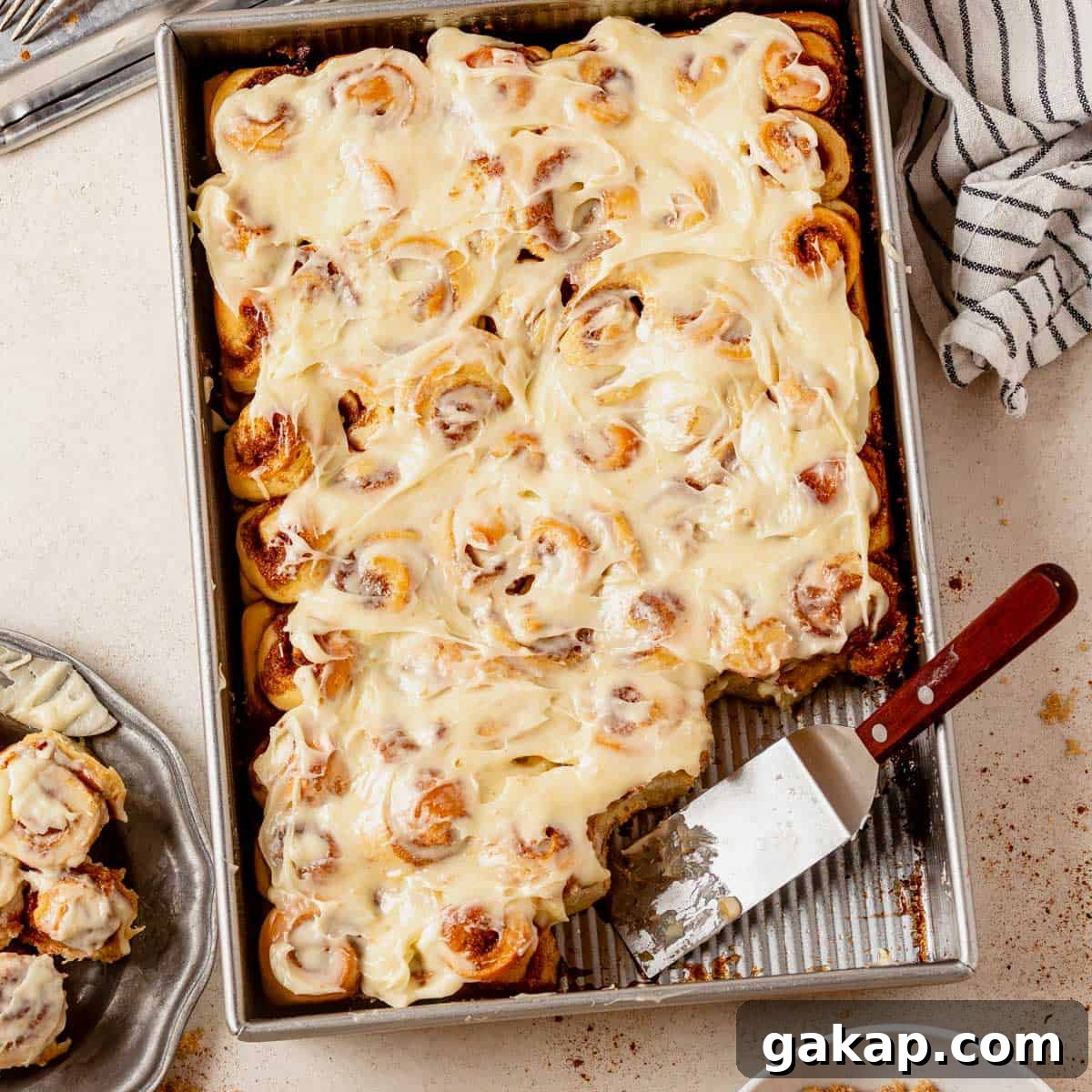
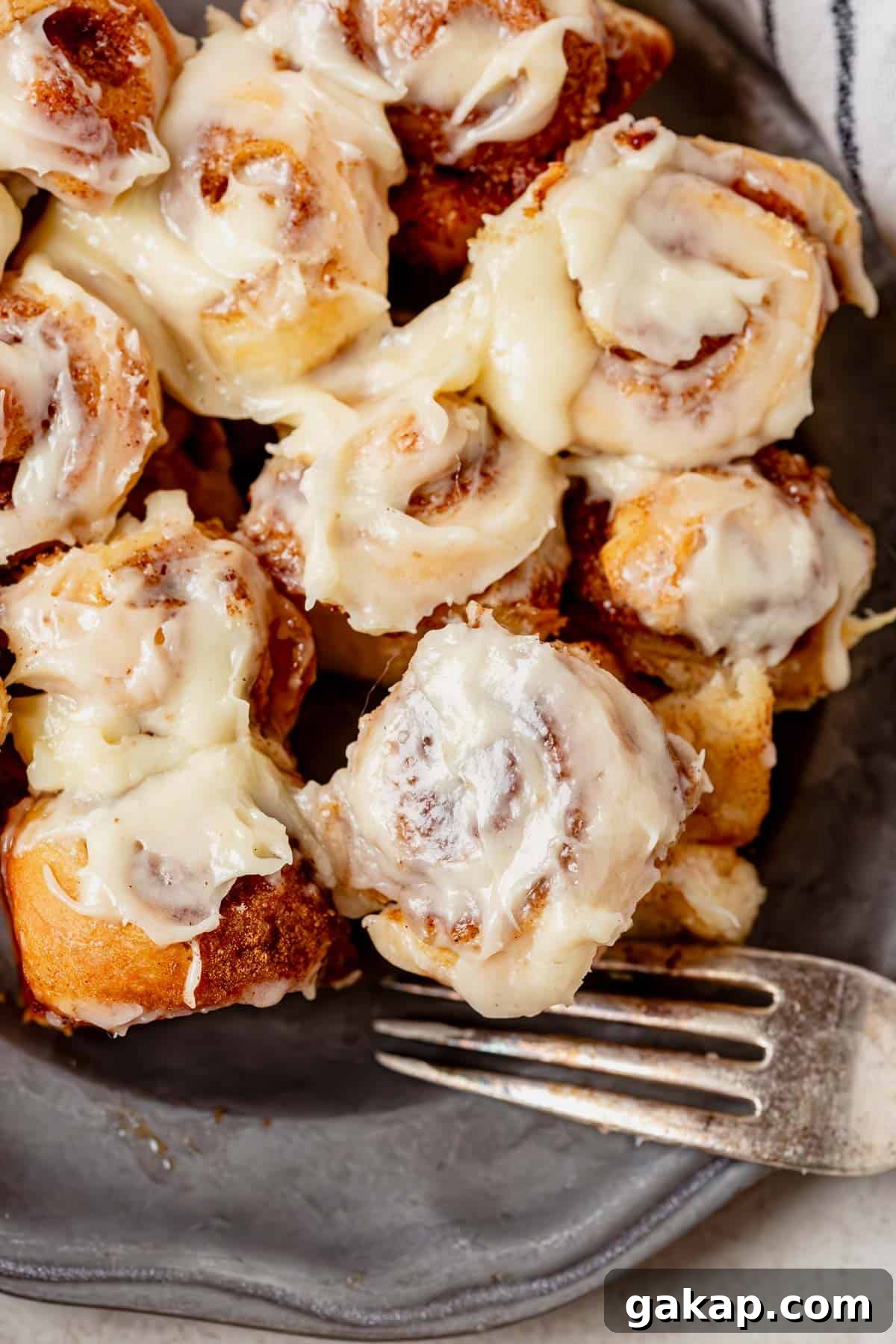
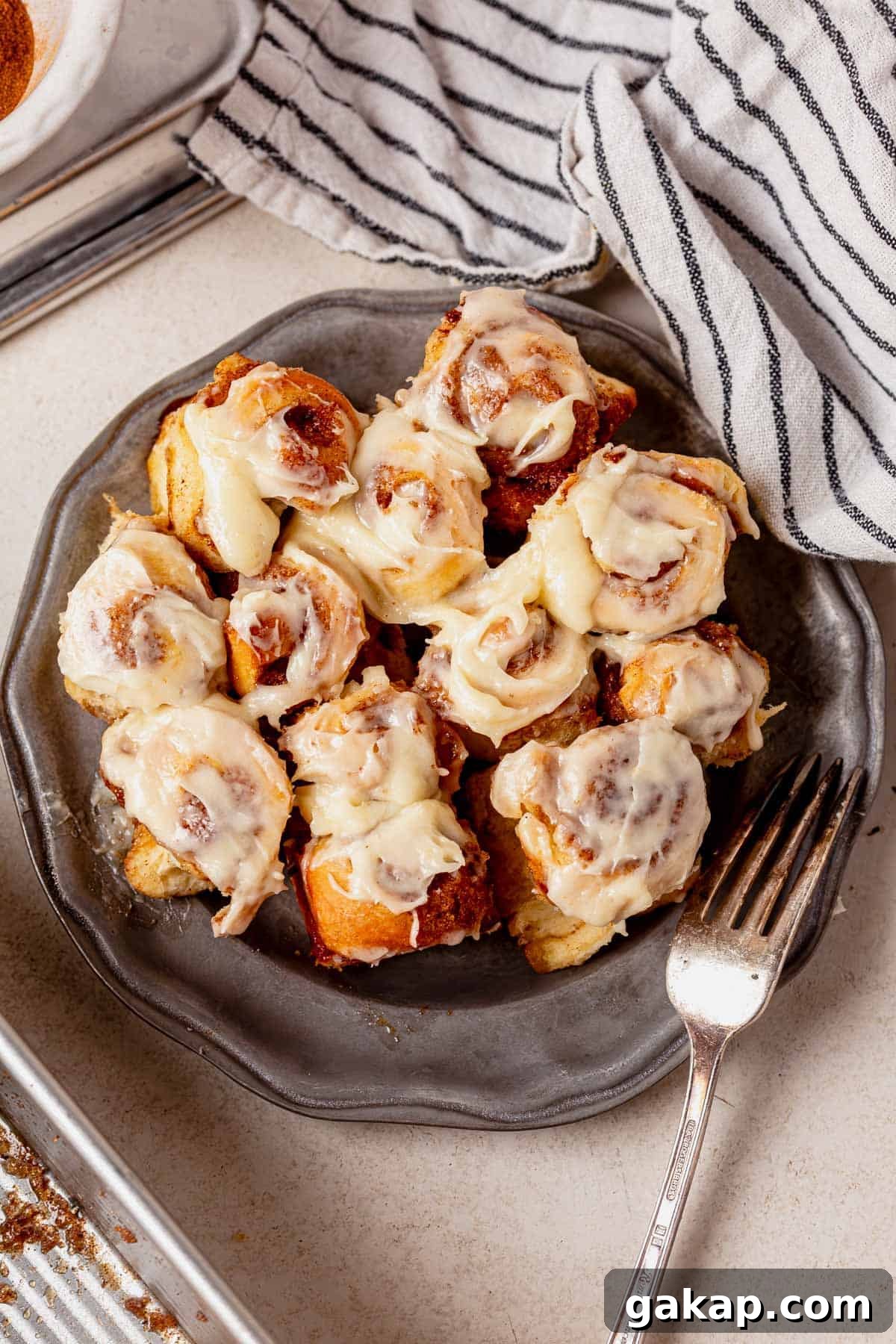
Mini cinnamon rolls are soft, pillowy bite-size cinnamon rolls baked together in a 9×13 pan and finished with cream cheese frosting. These take about 2 hours start to finish and use bread flour, honey, Greek yogurt (or sour cream), butter, and a brown sugar–cinnamon filling for a bakery-style texture.
The dough is rolled into a large rectangle, cut into thin strips, and rolled into tight spirals so you get dozens of mini rolls in one pan. Just before baking, warm heavy cream is poured between the rolls to create tender, gooey centers and keep the rolls soft for days.
These mini rolls are ideal for holiday brunches, baby showers, Christmas morning, or any time you need to feed a crowd—guests can grab a couple without committing to a single large roll.
After testing cinnamon roll dough many ways, this method consistently produces the softest, most pillowy rolls with visible pull-apart layers.
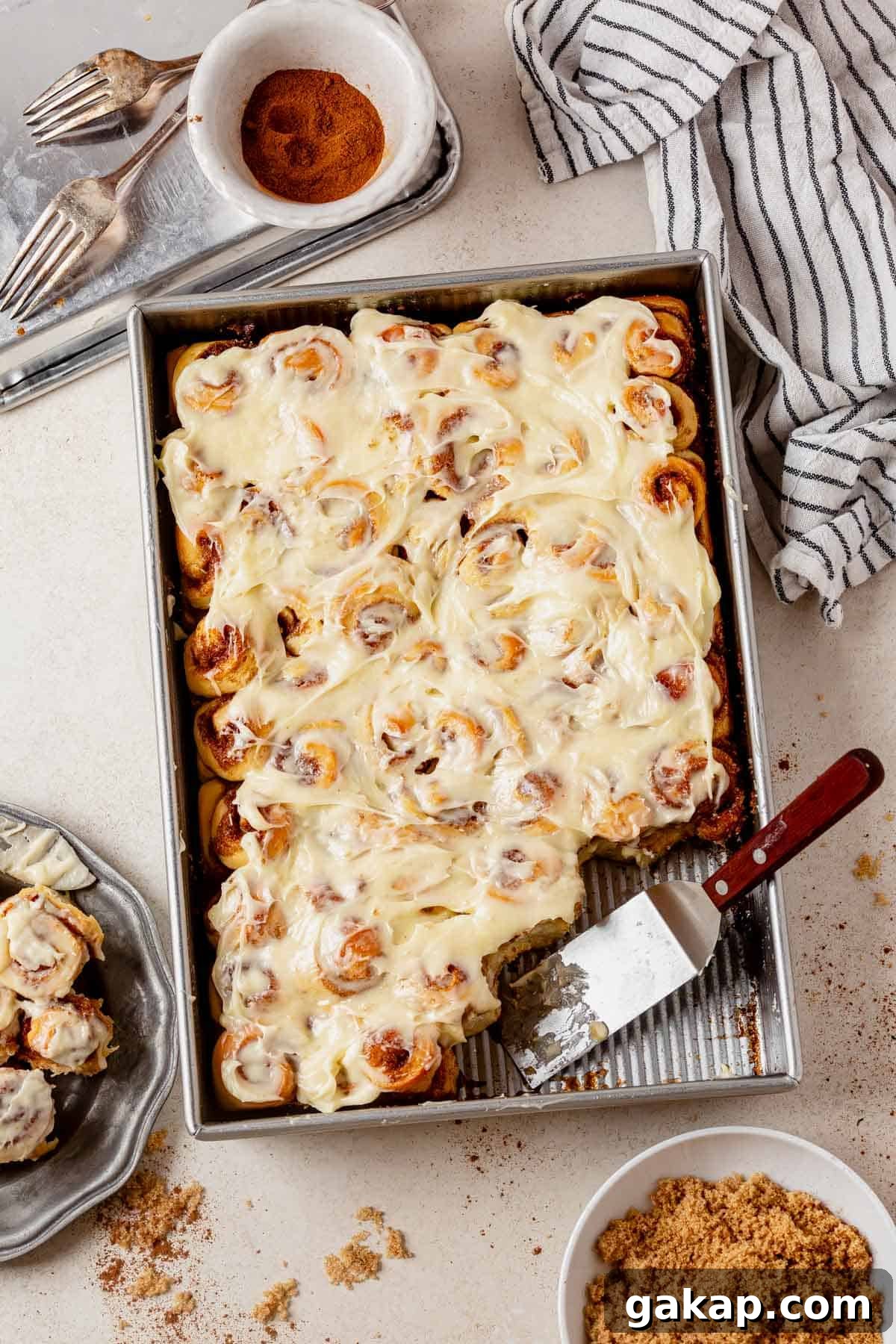
How to Make Mini Cinnamon Rolls
Instead of slicing one large log like traditional cinnamon rolls, this technique yields about 60 tiny rolls that bake together into soft pull-apart layers.
Quick overview:
- Make an enriched dough.
- Let it rise until puffy.
- Roll it into a large rectangle.
- Spread the cinnamon-sugar filling.
- Cut into thin strips.
- Roll each strip into a mini spiral.
- Let the rolls rise again briefly.
- Pour warm cream between the rolls and bake.
- Frost and serve.
The result is dozens of soft mini rolls with caramelized cinnamon layers and gooey centers.
Why These Mini Cinnamon Rolls Stay Soft for Days
The dough here is the same base used for classic soft cinnamon rolls, but the technique and a few ingredient choices are what keep them moist and tender longer. This recipe uses five specific methods that preserve softness:
- Honey retains moisture: Honey is hygroscopic and helps the dough hold moisture longer than sugar alone.
- Greek yogurt softens the crumb: Yogurt slightly weakens gluten so the finished crumb is tender rather than chewy.
- Bread flour provides structure: The higher protein content supports rise and structure while keeping the rolls soft.
- Butter is kneaded in after gluten develops: Adding butter during kneading coats gluten strands, producing delicate, pull-apart layers like a bakery roll.
- Warm cream soak: Pouring warm cream between the rolls before baking creates a custardy interior that stays soft for days.
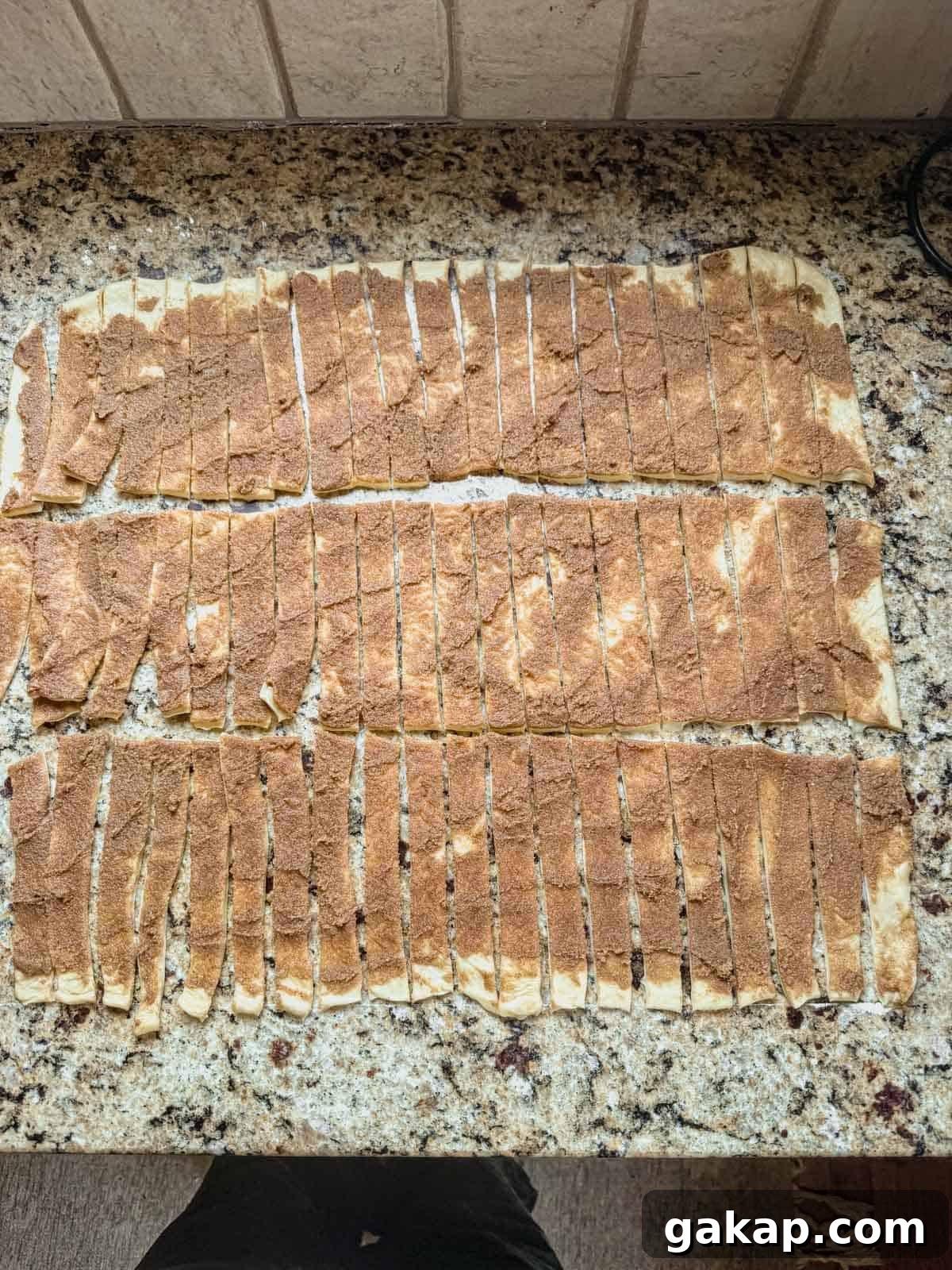
How to Shape Mini Cinnamon Rolls
These rolls are shaped by cutting the filled dough into thin strips and rolling each strip into a tight spiral. That produces even, compact mini rolls that bake together.
Shaping steps:
- Roll the dough into a roughly 20×18 inch rectangle.
- Spread the cinnamon-sugar filling evenly to the edges.
- Cut the rectangle into three long horizontal strips.
- Cut each long strip into 1 inch vertical pieces.
- You should have about 60 small strips total.
- Roll each strip tightly into a mini spiral and arrange them in a greased 9×13 pan.
Keep each strip close to 1 inch. If strips are uneven some rolls will be taller and bake at a different rate. A ruler or light scoring makes even cuts easier.
Step-by-Step Instructions
Step 1 — Activate the yeast: Warm milk to 110–113°F. Mix the milk with yeast and 1 tablespoon sugar and let sit about 5 minutes until foamy.
Step 2 — Mix wet ingredients: Add honey, the remaining sugar, Greek yogurt, eggs, egg yolk, and vanilla. Mix briefly until combined.
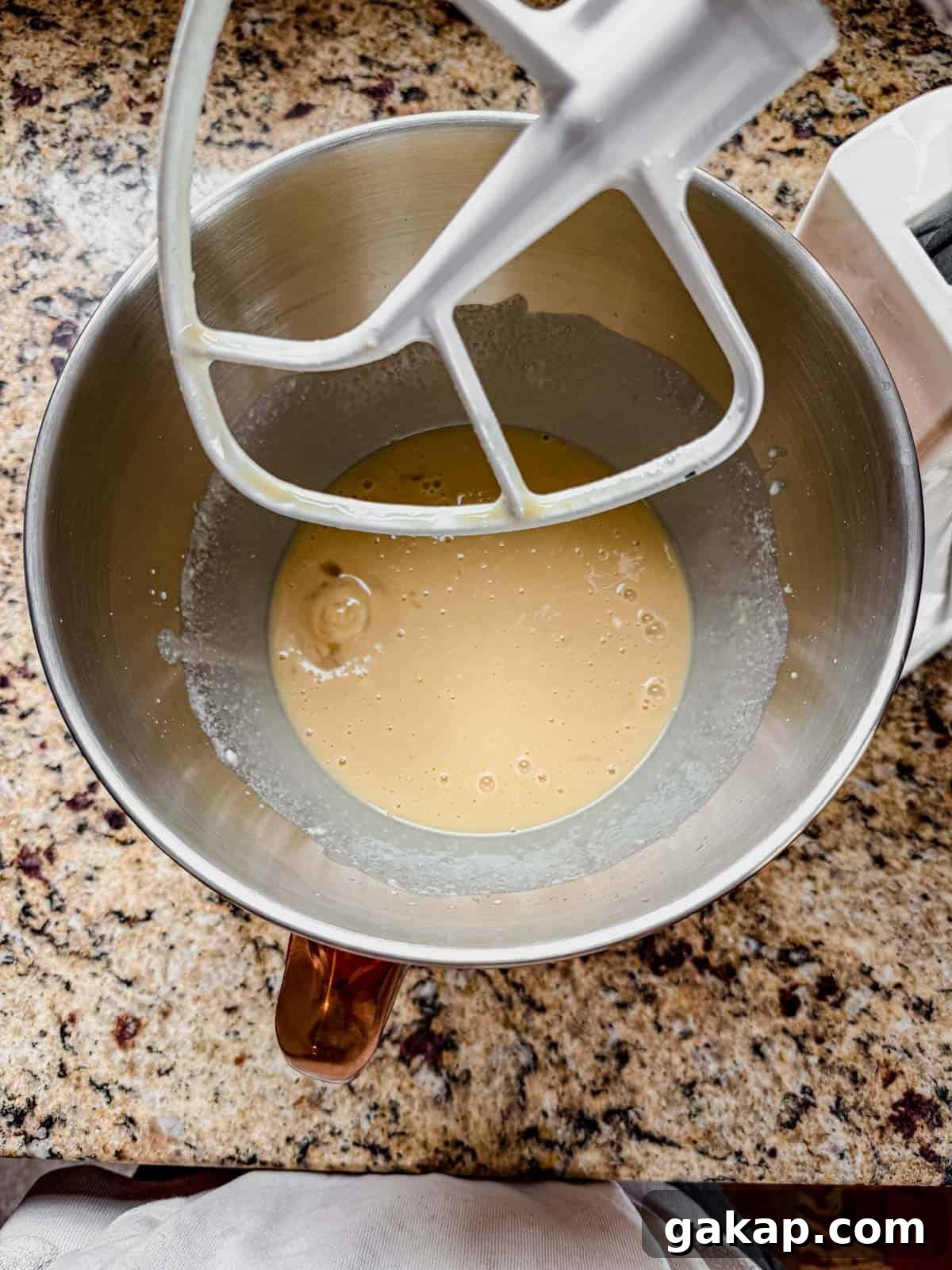
Step 3 — Add dry ingredients and rest: Add bread flour and salt and mix on low until a shaggy dough forms, about 2 minutes. Let rest 10 minutes to hydrate the flour and relax the gluten.
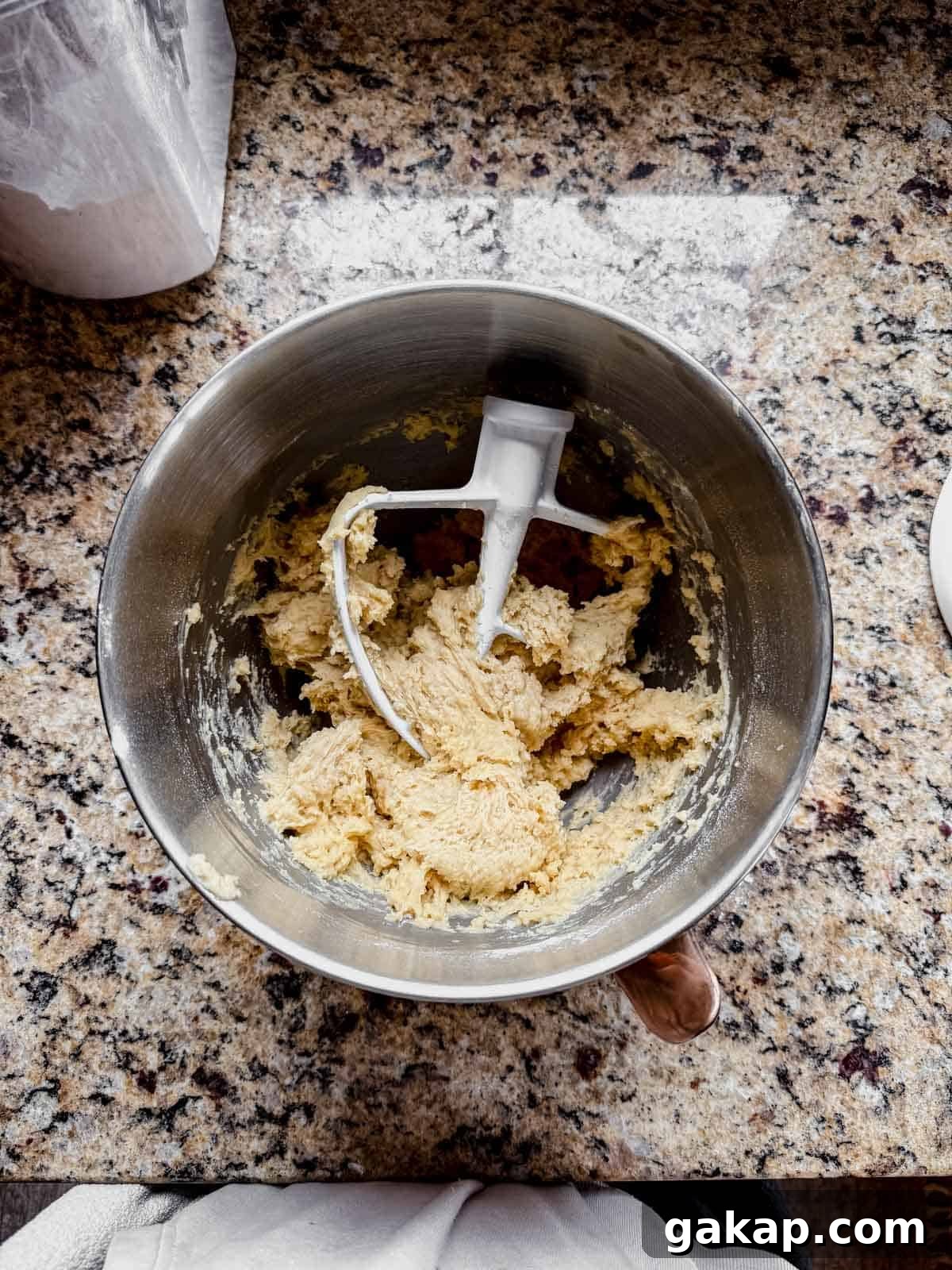
Step 4 — Develop the gluten: Switch to a dough hook and knead on medium speed 5–6 minutes until smooth and elastic and the dough pulls away from the bowl sides.
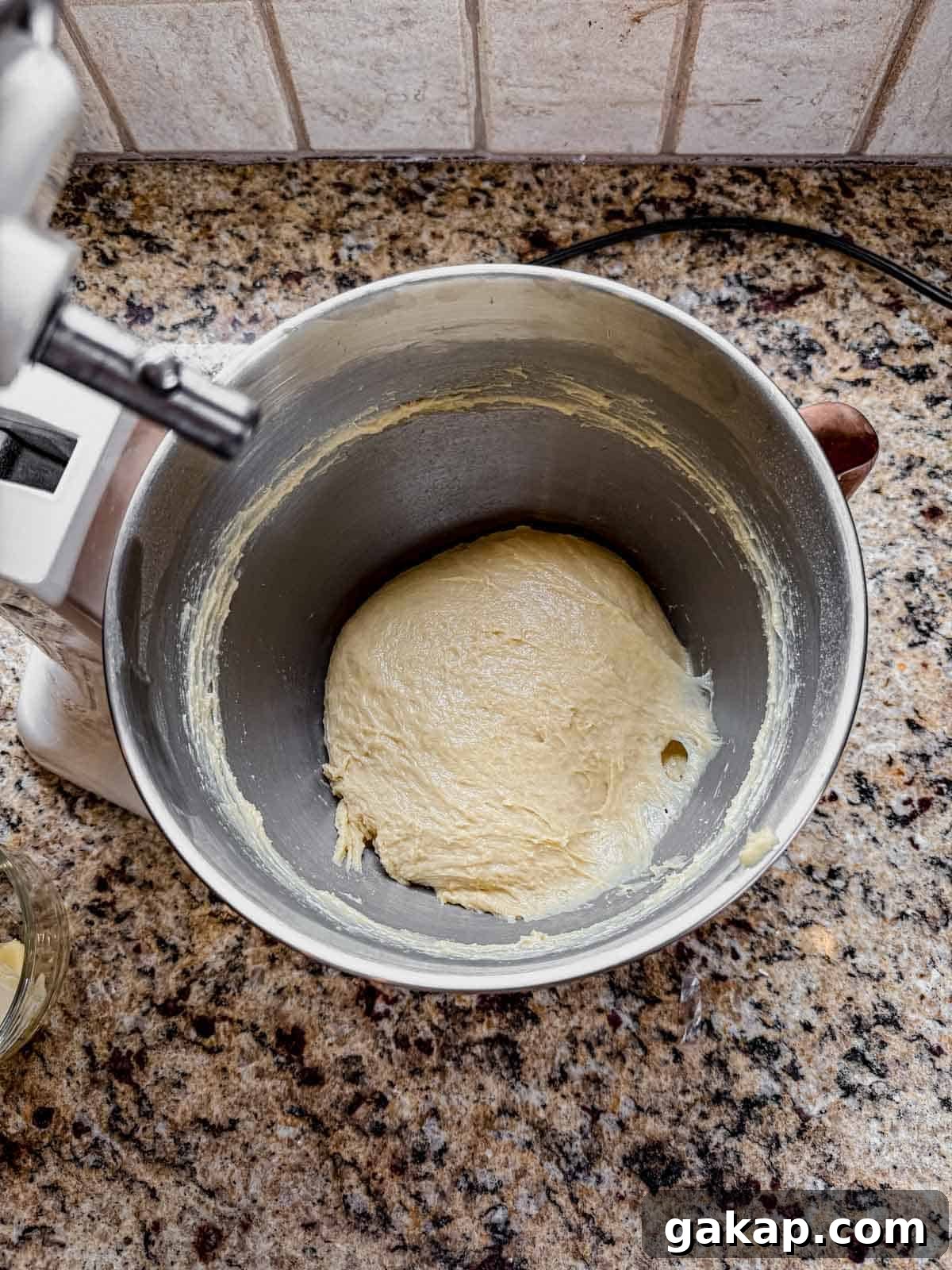
Step 5 — Add butter: With the mixer running on low, add softened butter one tablespoon at a time, allowing each piece to incorporate. Continue kneading 4–5 minutes until the dough is smooth, stretchy, and slightly tacky.
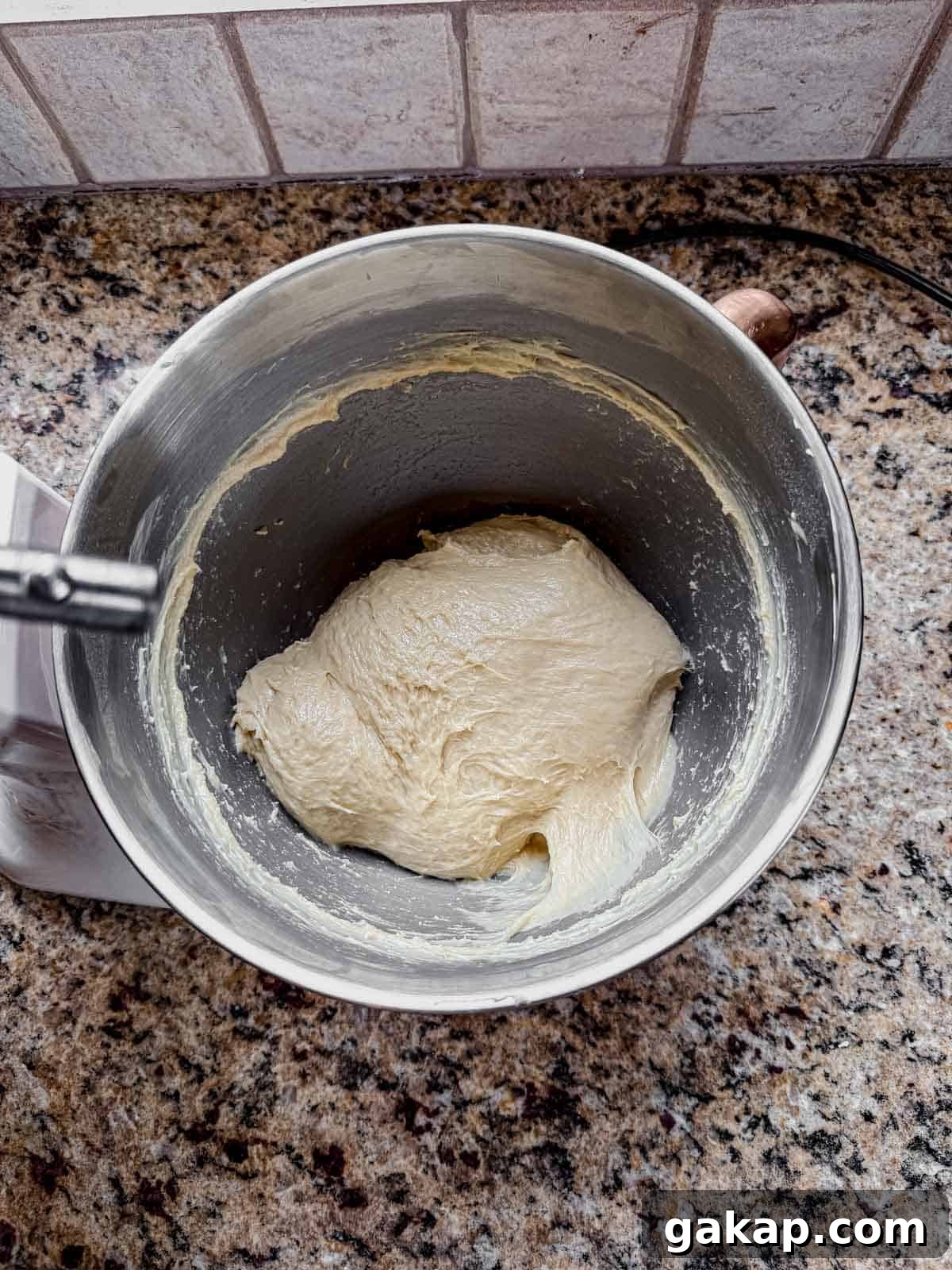
Step 6 — First rise: Transfer dough to a greased bowl, cover, and let rise 45–60 minutes until puffy (it doesn’t need to fully double).
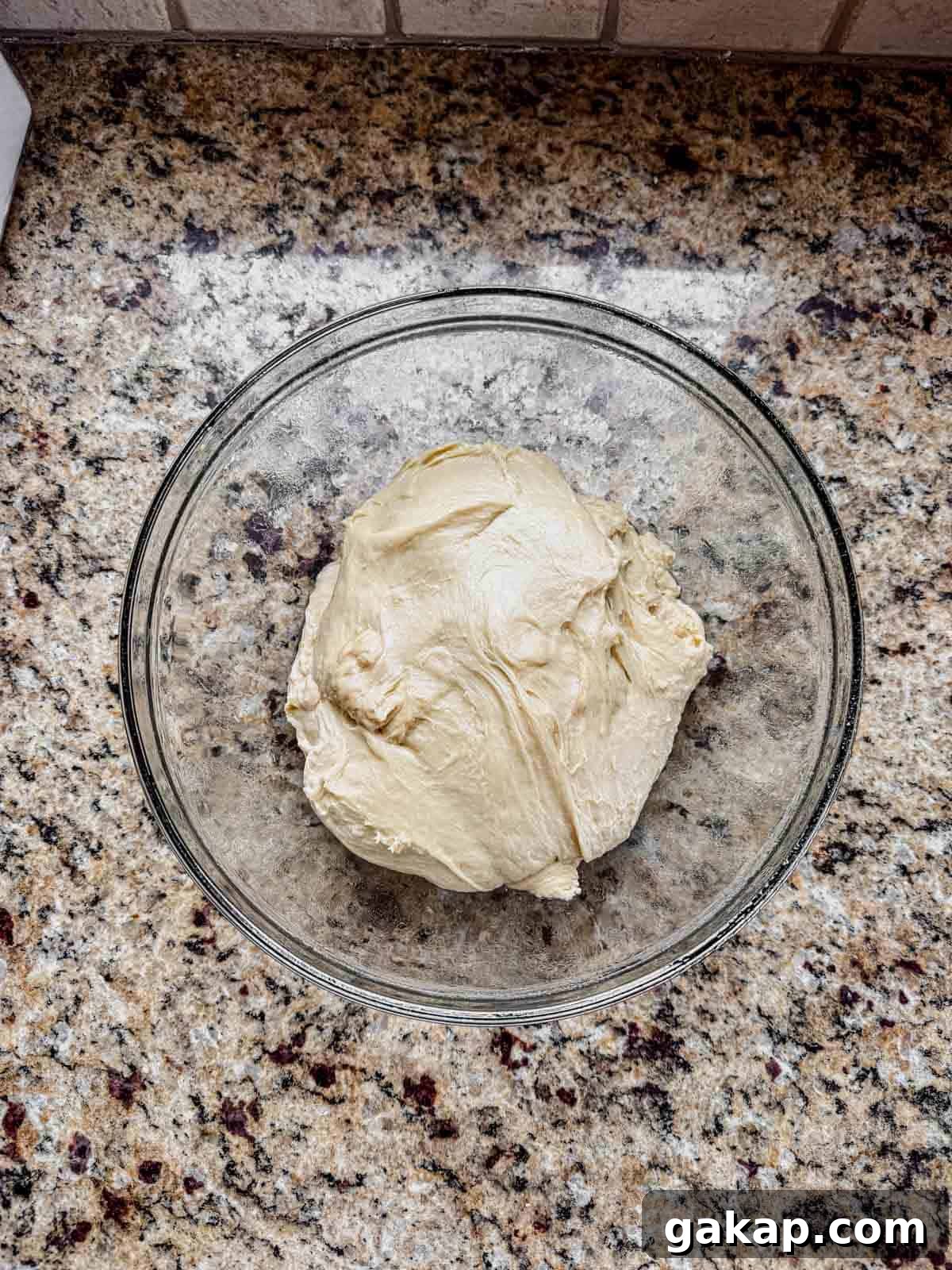
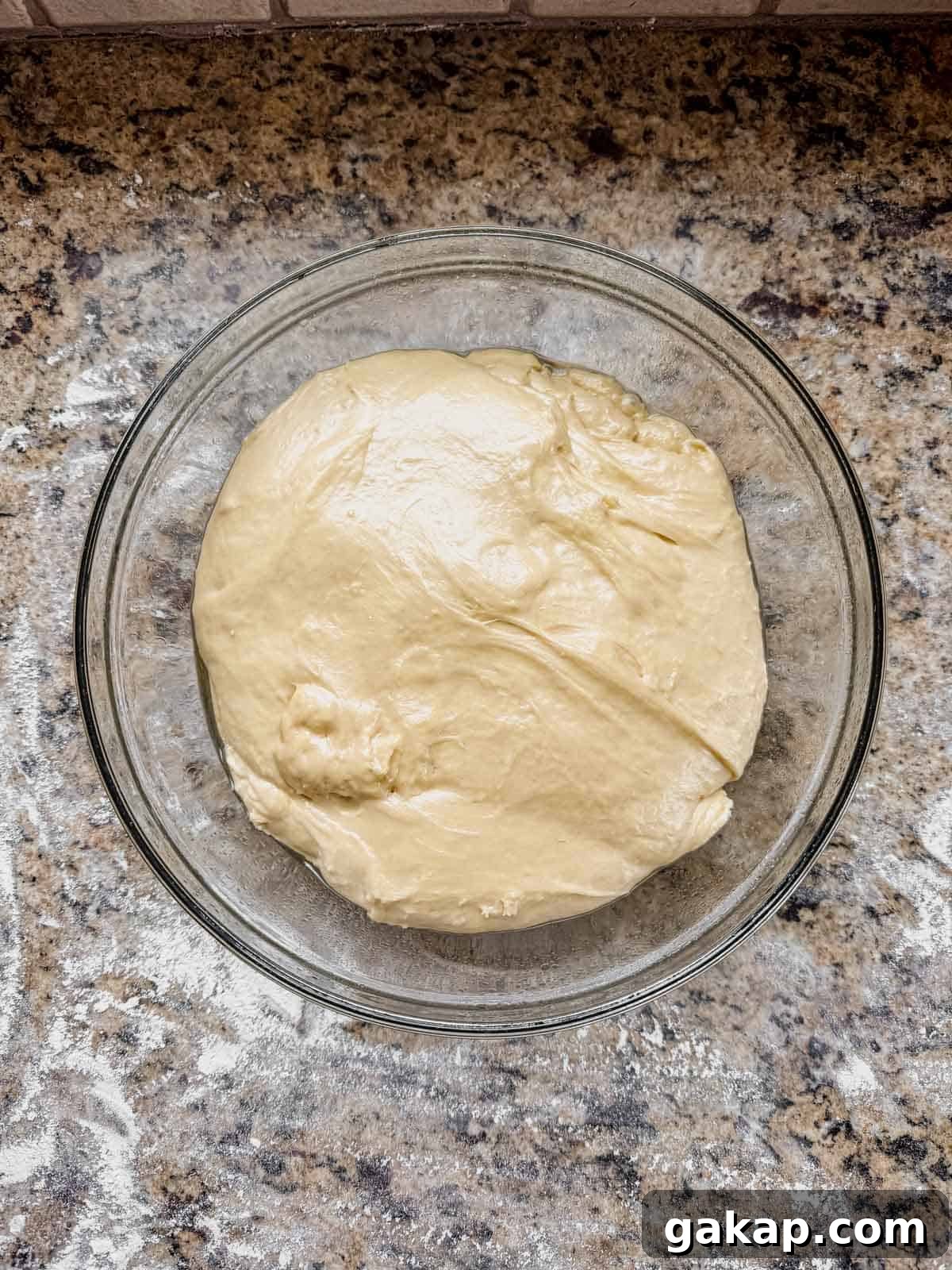
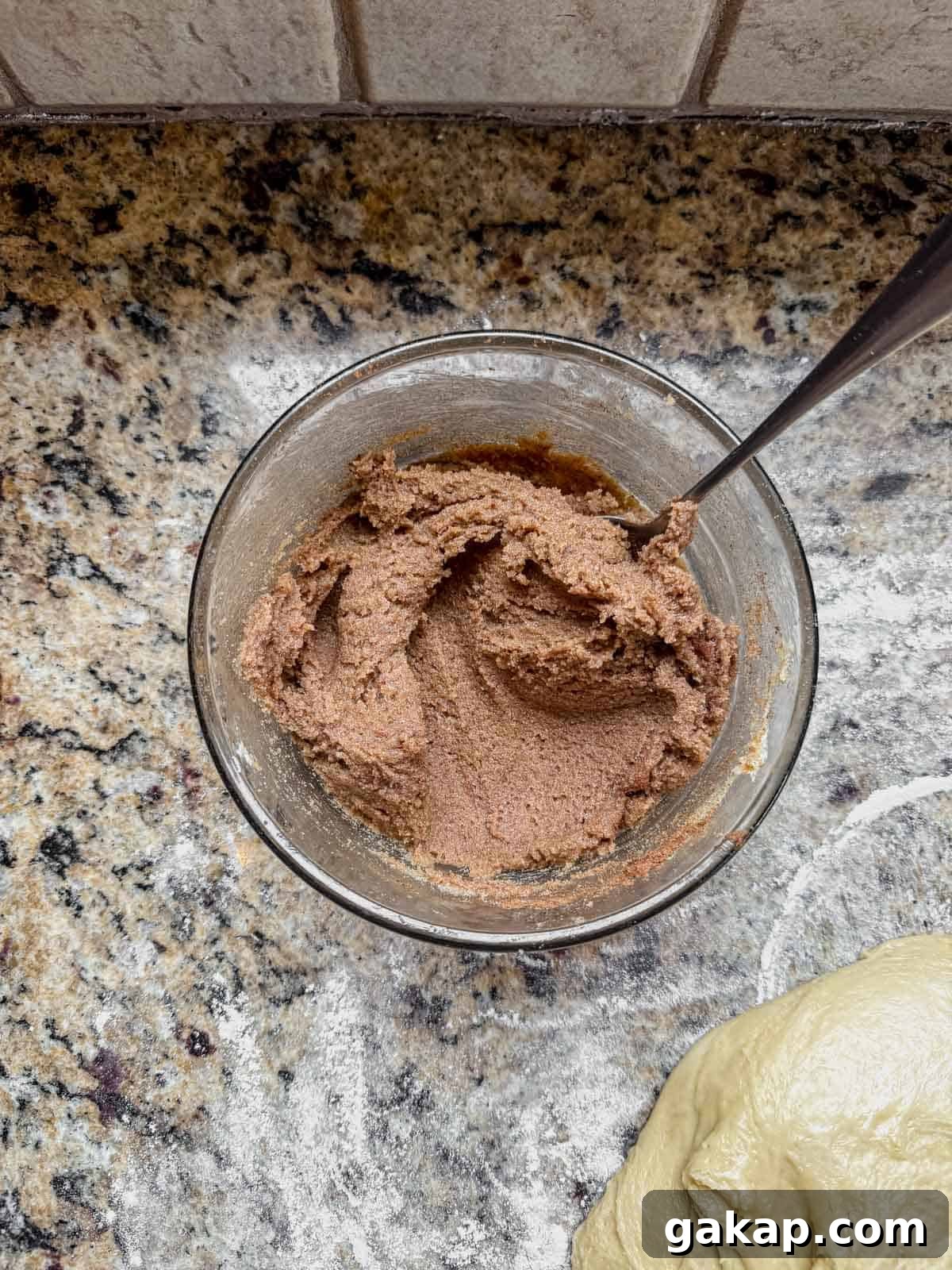
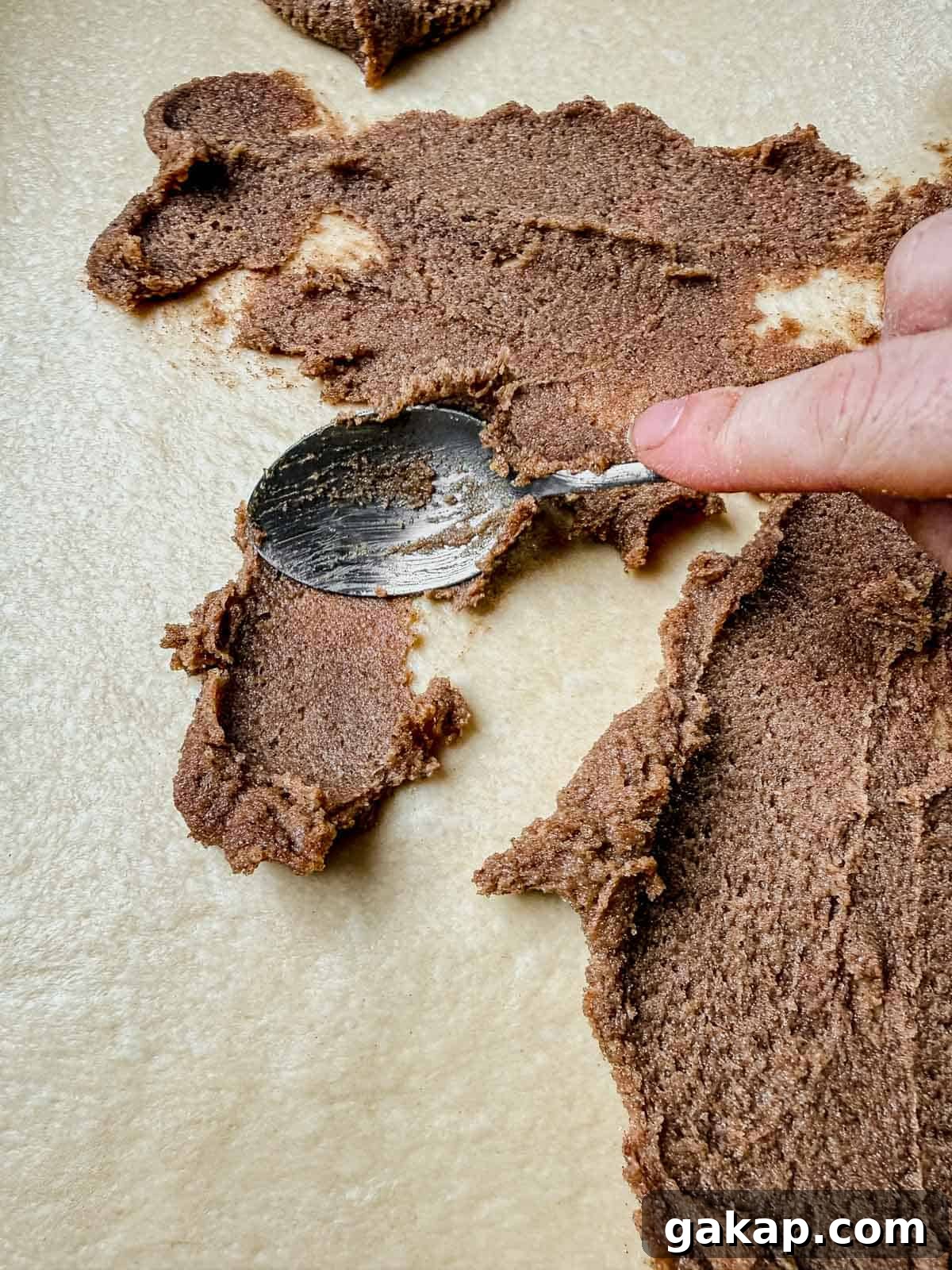
Step 7 — Make the filling: Combine softened butter, packed light brown sugar, ground cinnamon, a pinch of salt, and vanilla to form a spreadable paste.
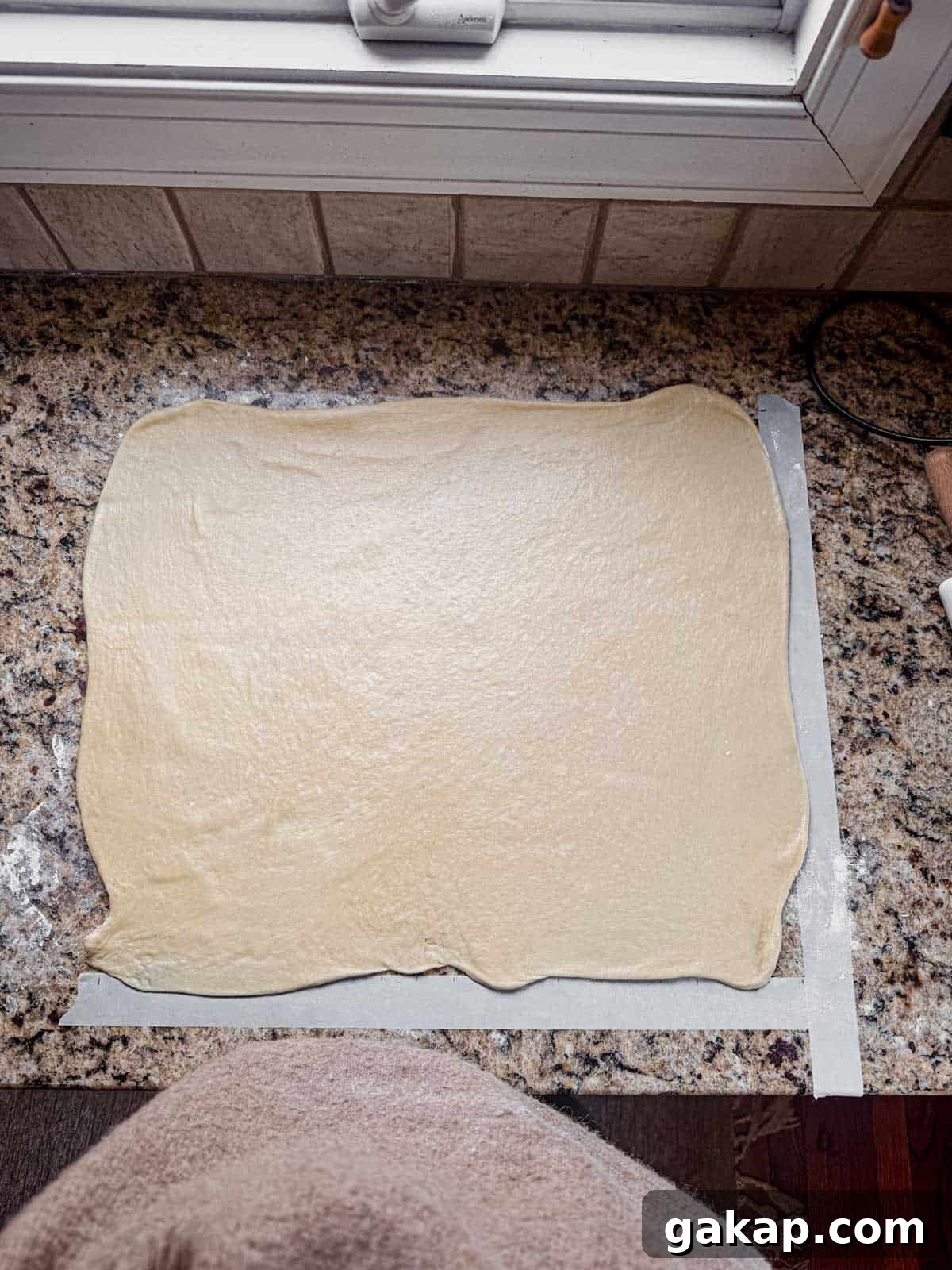
Step 8 — Roll and fill: Roll the dough into a 20×18 inch rectangle and spread the filling evenly to the edges.
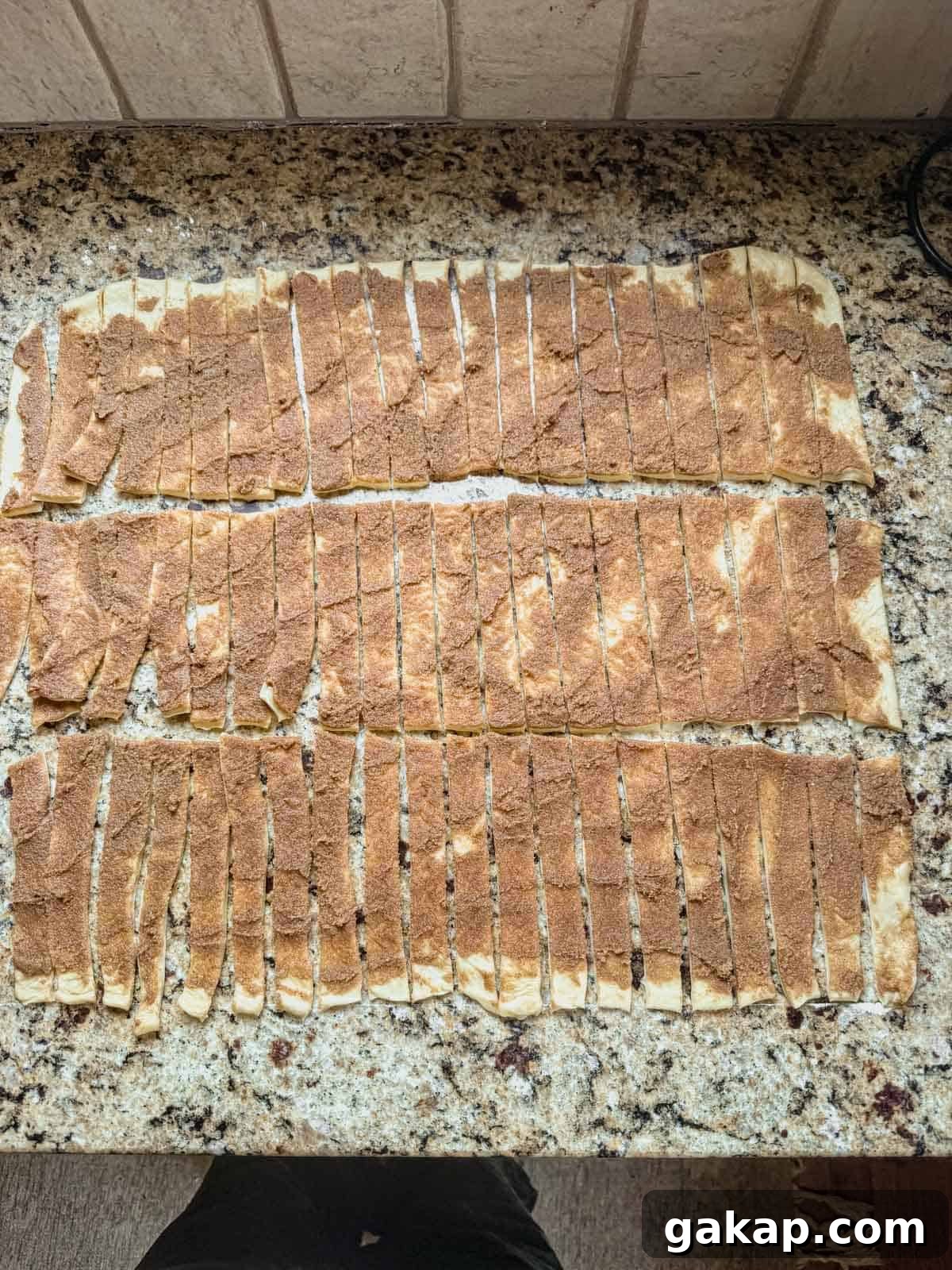
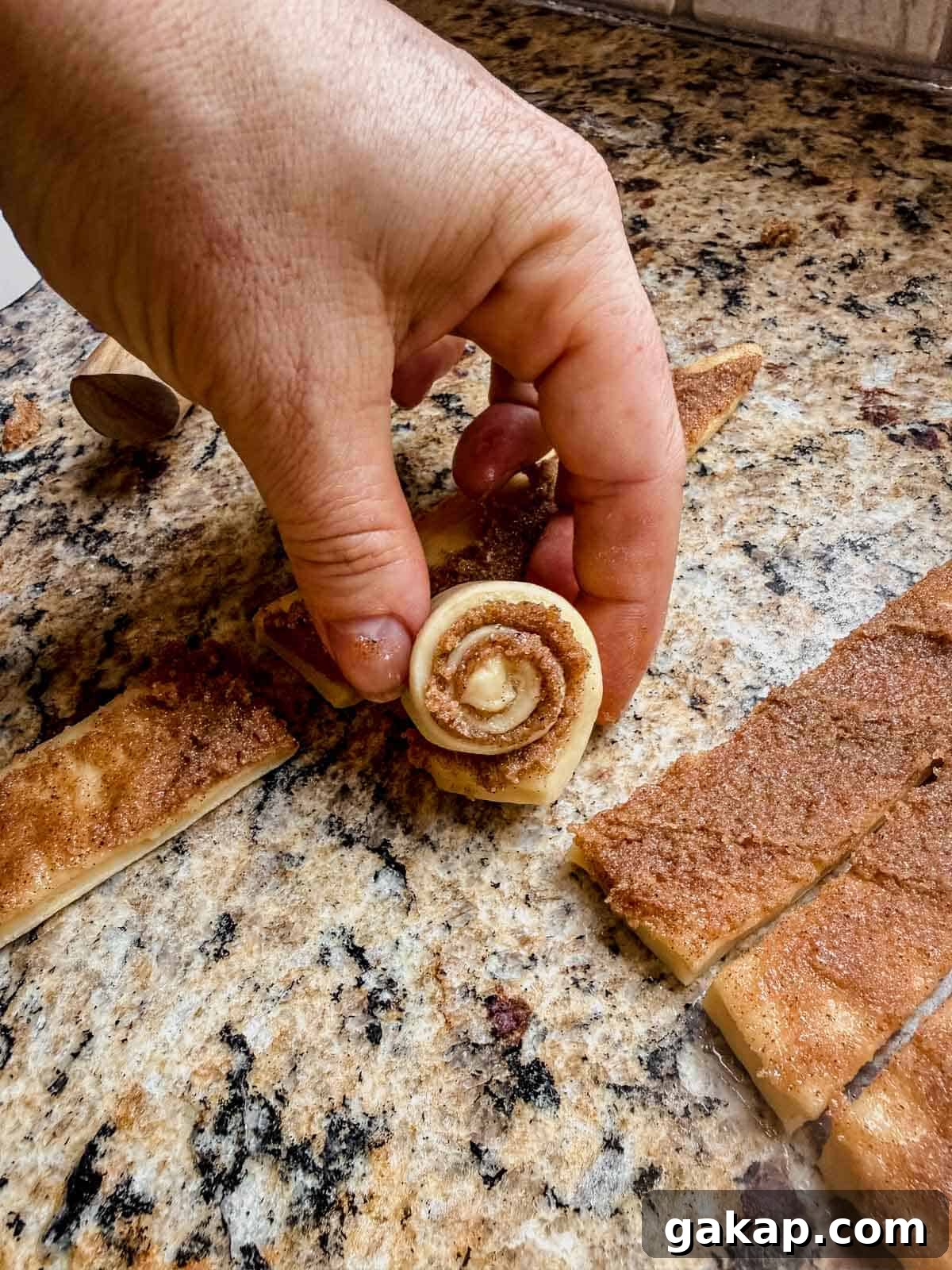
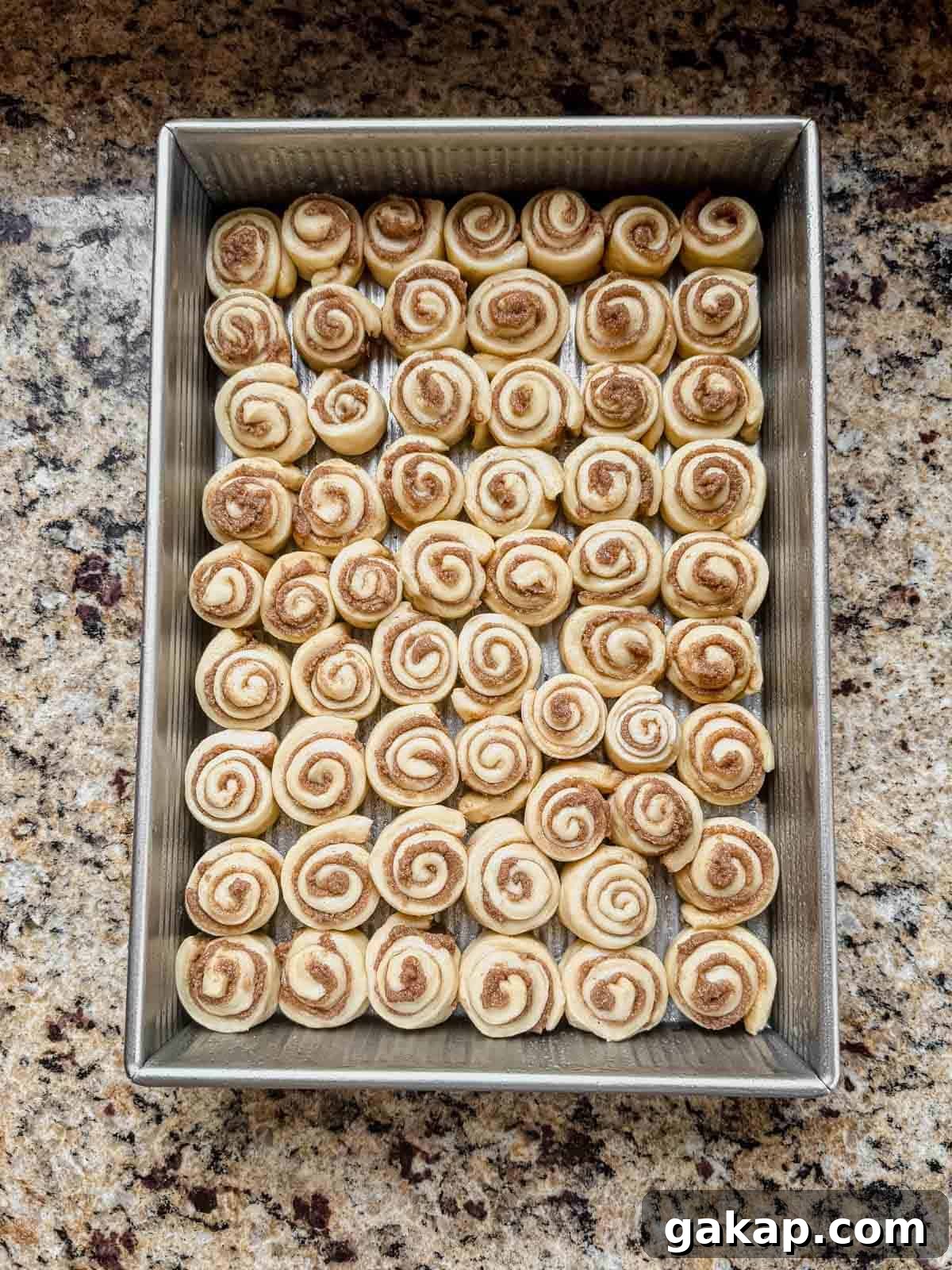
Step 9 — Cut and roll mini cinnamon rolls: Cut the dough into three 6-inch horizontal strips, then cut each strip into 1-inch sections to yield about 60 strips. Tightly roll each strip into a spiral and place them in a greased 9×13 pan.
Step 10 — Second rise: Cover and let the rolls rise 15–30 minutes until puffy. Mini rolls should look slightly underproofed before baking because they expand rapidly in the oven. Preheat the oven to 350°F.
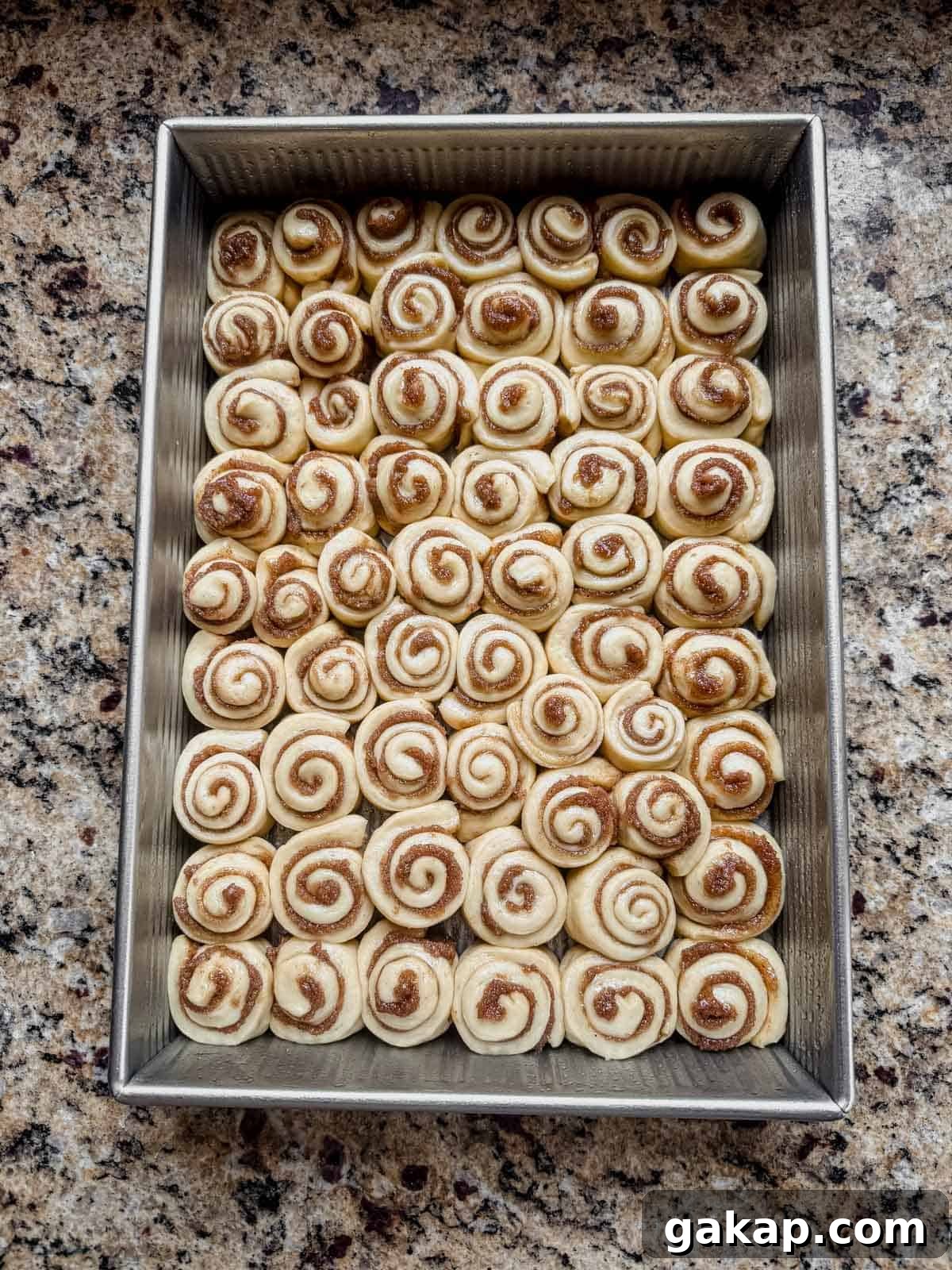
Step 11 — Add the cream and bake: Warm the heavy cream slightly and pour it between the rolls, not over the tops. Bake 18–22 minutes until lightly golden and the center reaches about 185–190°F. Let cool 10 minutes.
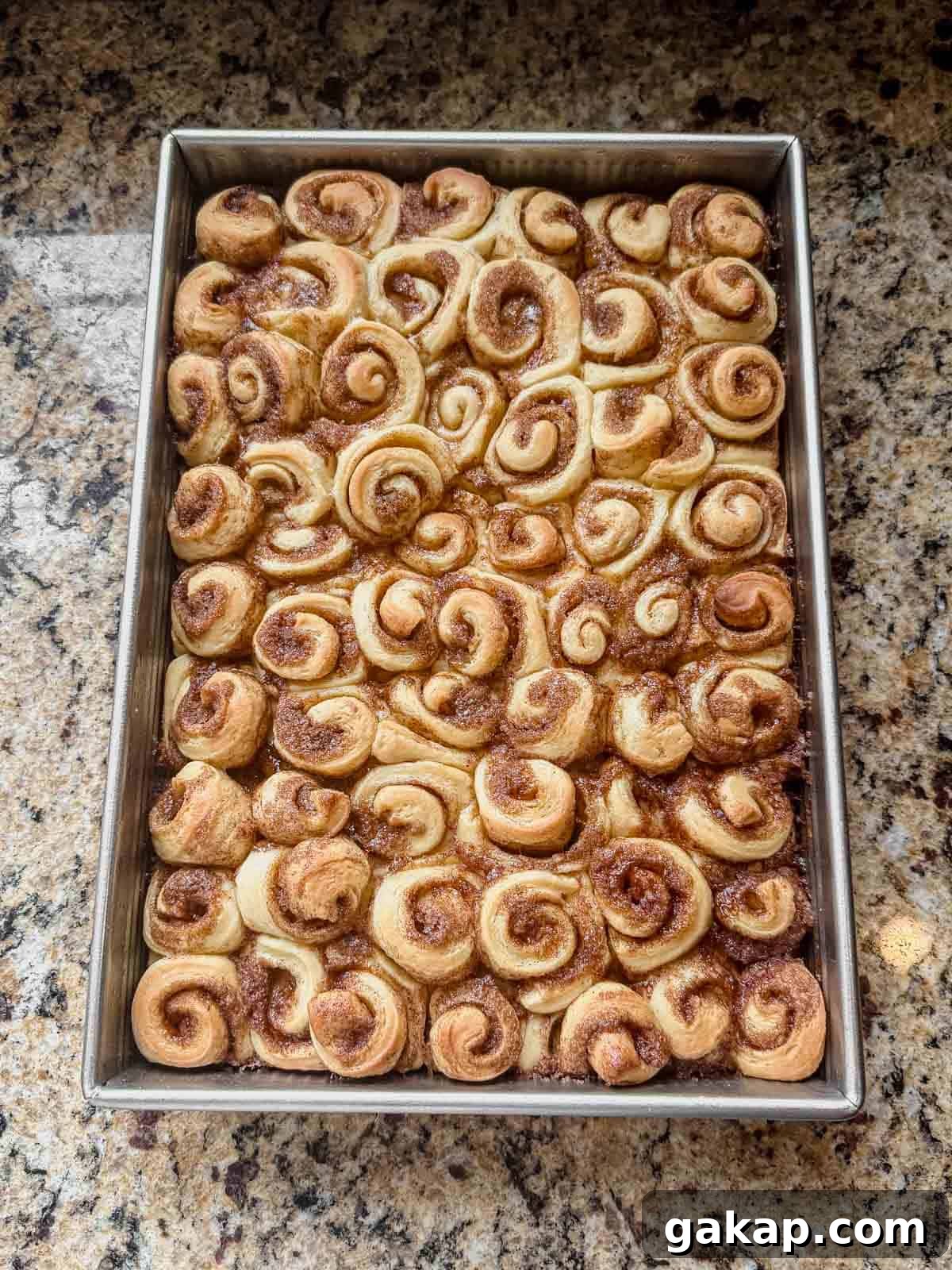
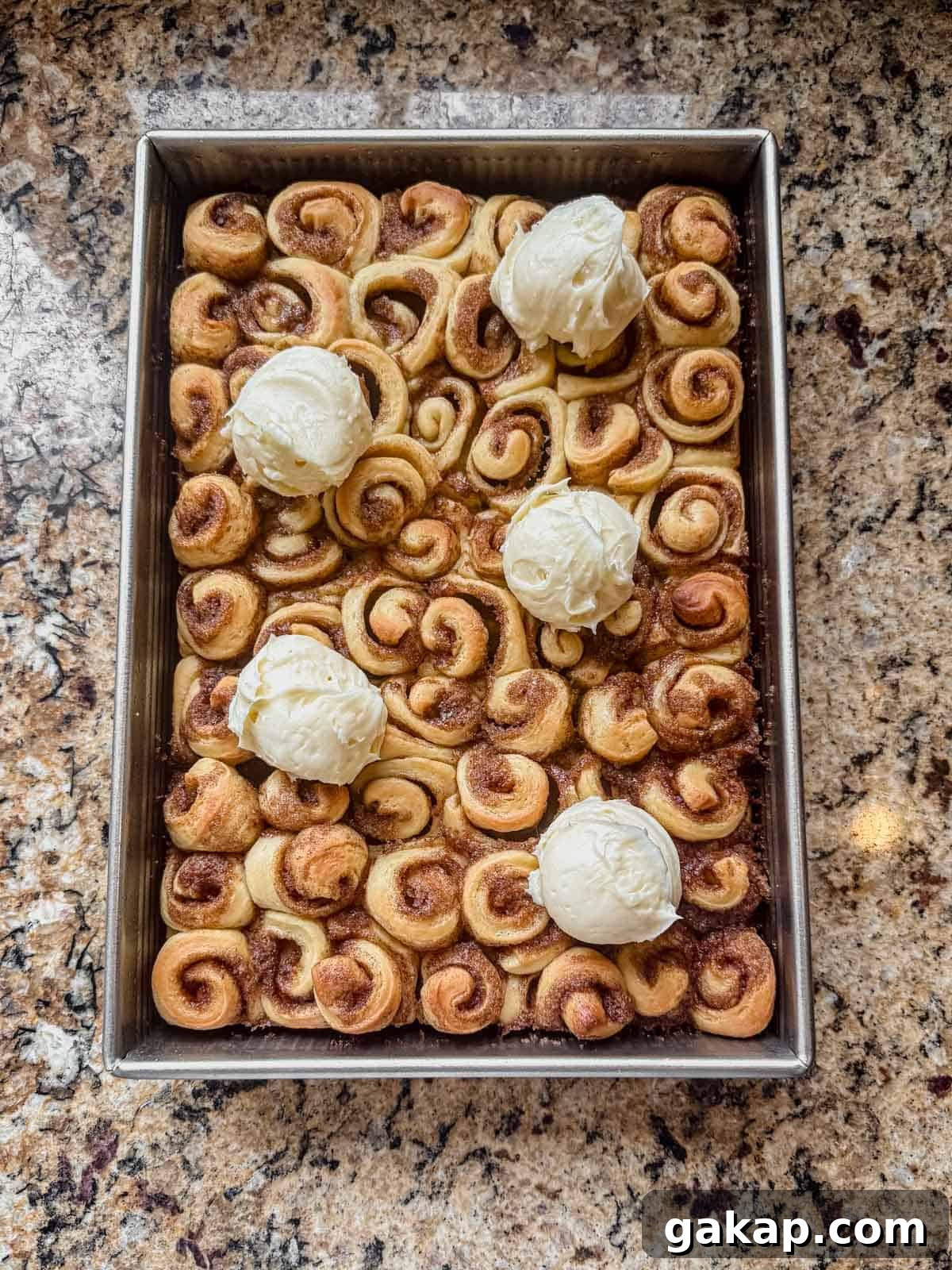
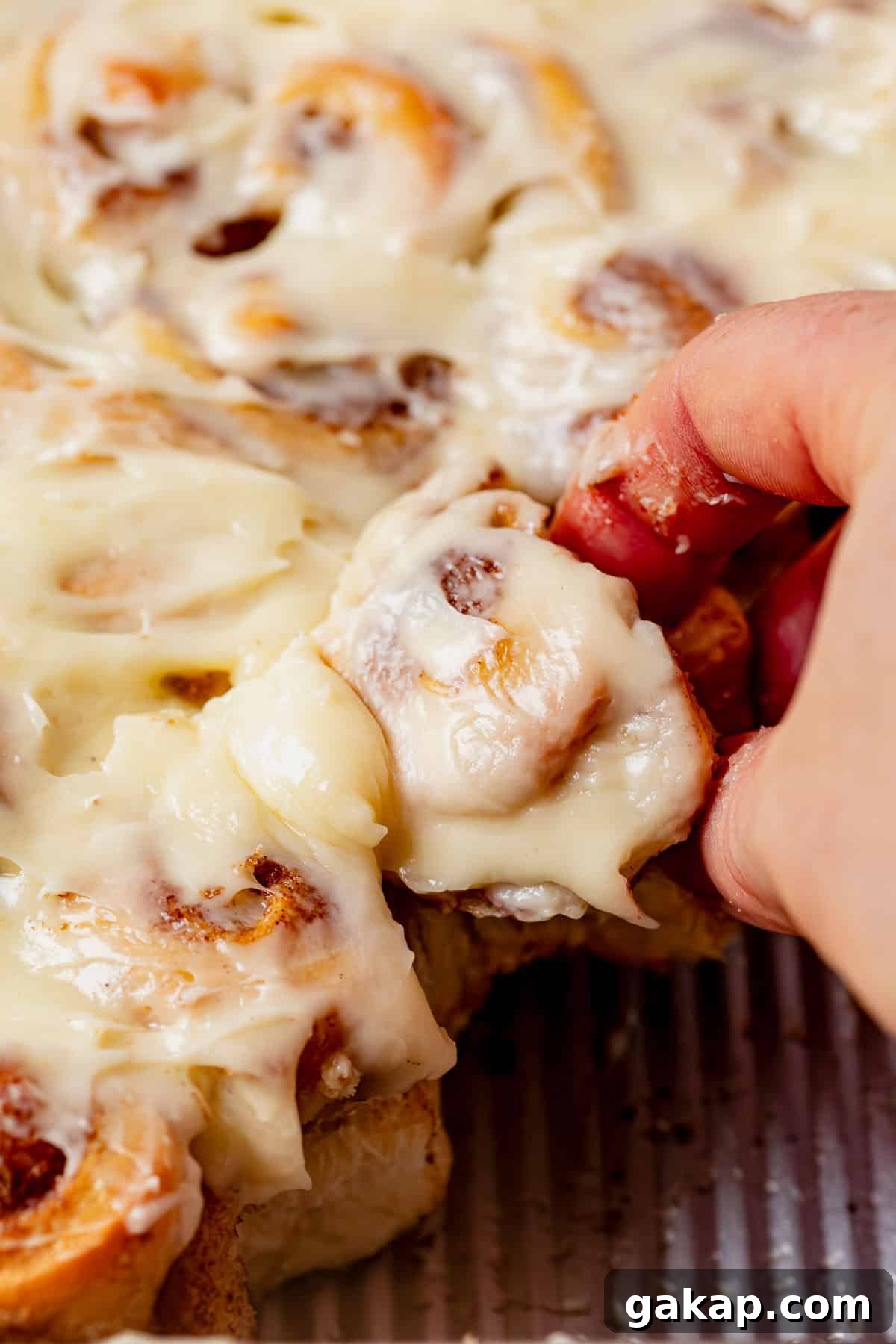
Step 12 — Make the frosting and serve: Beat cream cheese and butter until smooth, then add powdered sugar, vanilla, and a pinch of salt. Add 1–2 tablespoons cream or milk as needed to reach spreadable consistency. Spread frosting over the warm rolls.
The Secret to Pillowy Cinnamon Rolls
The key technique is developing gluten first, then kneading in the butter. That order produces delicate gluten strands coated with butter so the crumb pulls apart in soft layers instead of becoming dense.
How to Tell When Mini Cinnamon Rolls Are Ready to Bake
They should look puffy but slightly underproofed. If they fully double before baking they can collapse or bake up dense. Small rolls finish rising quickly once they enter the oven.
Common Mistakes When Making Mini Cinnamon Rolls
- Adding too much flour — the dough should be slightly tacky but smooth.
- Overproofing — let them be a bit underproofed so they expand in the oven without collapsing.
- Skipping the cream soak — pouring warm cream between the rolls creates the custardy interior; omit it and the rolls will be drier.
- Baking at too high a temperature — watch for even, light golden color and check internal temperature.
Make Ahead and Storage Tips
- Make ahead overnight: Assemble the rolls in the pan, cover tightly, and refrigerate. Let sit at room temperature 45–60 minutes before baking.
- Store leftovers covered at room temperature up to 2 days or refrigerate 4–5 days.
- Reheat individual rolls in the microwave 15–20 seconds.
- Freeze baked unfrosted rolls up to 2 months; thaw before reheating and frosting.
Frequently Asked Questions
Dense rolls often result from too much flour or insufficient kneading to develop gluten.
Yes. Assemble the rolls in the pan, cover tightly, refrigerate overnight, and let them sit at room temperature 45–60 minutes before baking.
Warm cream melts into the dough while baking and creates a soft, almost custard-like interior between the rolls.
Yes. Freeze baked unfrosted rolls for up to 2 months and thaw before reheating and frosting.
Mini Cinnamon Rolls
Ingredients
Dough
- ¾ cup whole milk, warmed to 110–113°F
- 2¼ teaspoons instant yeast (1 packet)
- ⅓ cup honey
- ¼ cup granulated sugar, divided
- ½ cup full-fat plain Greek yogurt or sour cream, room temperature
- 2 large eggs + 1 egg yolk, room temperature
- 1 teaspoon vanilla
- 4¼ cups bread flour (about 510g)
- 1½ teaspoons salt
- 6 tablespoons unsalted butter, very soft but not melted
- ½ cup heavy cream, warmed slightly
Cinnamon Filling
- ½ cup unsalted butter, very soft
- 1 cup packed light brown sugar
- 2 tablespoons ground cinnamon
- ¼ teaspoon salt
- ½ teaspoon vanilla
Cream Cheese Frosting
- 4 oz full-fat block cream cheese, softened
- 4 tablespoons unsalted butter, softened
- 1¼ cups powdered sugar
- 1 teaspoon vanilla extract
- Pinch of salt
- 1 tablespoon heavy cream or milk, as needed
Instructions
- Activate the yeast (5 min): Warm the milk to 110–113°F. Combine milk, yeast, and 1 tablespoon sugar and let sit 5 minutes until foamy.
- Mix wet ingredients (2 min): Add honey, remaining sugar, yogurt, eggs, egg yolk, and vanilla. Mix briefly to combine.
- Add dry ingredients and rest (12 min): Add bread flour and salt. Mix on low until shaggy, about 2 minutes, then rest uncovered 10 minutes.
- Knead to develop gluten (6 min): Switch to a dough hook and knead 5–6 minutes until smooth and elastic.
- Add butter and knead again (6 min): Add softened butter 1 tablespoon at a time on low, then knead 4–5 minutes until smooth and slightly tacky.
- First rise (45 min): Transfer dough to a greased bowl, cover, and let rise 45–60 minutes until puffy but not doubled.
- Make the filling (5 min): Mix softened butter, brown sugar, cinnamon, salt, and vanilla into a spreadable paste.
- Roll and fill (8 min): Roll dough into a 20×18 inch rectangle. Spread the filling evenly to the edges.
- Cut and roll (15 min): Cut the dough into three 6-inch strips, then cut each into 1-inch pieces to yield about 60 strips. Tightly roll each strip and place in a greased 9×13 pan.
- Second rise (15–30 min): Cover and let rise until noticeably puffy. Preheat oven to 350°F.
- Add the cream and bake (22–25 min): Warm heavy cream slightly and pour between the rolls. Bake 22–25 minutes until lightly golden and the centers read 185–190°F. Cool 10 minutes.
- Make frosting and serve (5 min): Beat cream cheese and butter until smooth, add powdered sugar, vanilla, and salt, and thin with 1–2 tablespoons cream or milk to spreadable consistency. Frost warm rolls.
Notes
Use a scale for best results: Bread dough is sensitive to flour measurement. Weigh 510g flour if possible to avoid dense rolls.
Desired dough tackiness: After kneading the dough should be slightly tacky but pull away from the bowl sides. Avoid adding extra flour unless necessary.
Add butter slowly: Knead the butter in after gluten develops to create the delicate pull-apart layers.
Mini rolls and proofing: Mini rolls should look slightly underproofed before baking since they expand quickly in the oven.
Pour warm cream between rolls: Pour the cream around and between the rolls, not directly on top, to create an ultra-soft interior.
Bake to temperature: Aim for 185–190°F in the centers to ensure fully cooked, soft rolls.
Overnight option: Assemble rolls, cover tightly, and refrigerate overnight. Let sit 45–60 minutes at room temperature before baking.
Storage: Store covered at room temperature up to 2 days or refrigerate up to 5 days. Reheat individual rolls 15–20 seconds in the microwave.
Nutrition
Nutrition information is an approximation.