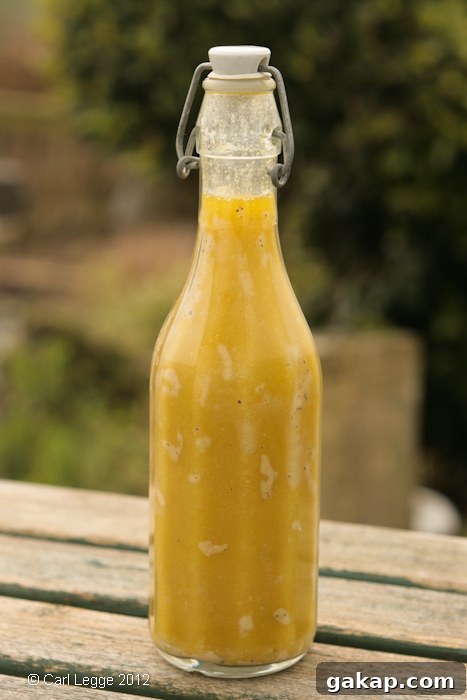
Writer and permaculture enthusiast Emma Cooper and her husband Pete visited us for an enjoyable stay last year. For lunch we served roast chicken, roasted pumpkin sourdough bread and a foraged salad. Emma later asked for the method I used to make the dressing, and here is the basic vinaigrette recipe I put together.
If you’re following the 52 Week Salad Challenge, I’ll be sharing more dressing ideas over time. The goal of the challenge is to enjoy home-grown or foraged salad every week of the year, and a good selection of dressings helps bring out the best in your harvest.
The term vinaigrette comes from the French for “sour wine” (vin-aigre). At its simplest, a vinaigrette is vinegar or citrus juice blended with oil so the acidic flavour can cling to the leaves and other ingredients. Below I explain a little of the theory and give a straightforward recipe you can use and adapt.
First, a short bit of explanation. Skip this if you prefer to go straight to the recipe.
A vinaigrette works because the acid (vinegar or citrus juice) adds bright, complementary flavours to the salad. Acid by itself doesn’t cling to leaves well, but oil does—provided the salad ingredients are dry. A vinaigrette is essentially a water-in-oil emulsion: the acidic liquid is broken into tiny droplets suspended in the oil. Shaking or whisking creates those droplets; adding mustard, garlic or finely chopped herbs helps stabilise the emulsion so it lasts longer.
The top photo shows a bottle of vinaigrette that has been shaken to emulsify the ingredients. The next image shows how the mixture separates back into distinct layers if left to settle.
Vinaigrette Recipe
The basic components are oil and vinegar or a citrus juice. The flavour and quality of these ingredients determine the final taste, so choose them with care. Some people prefer milder oils—lightly flavoured sunflower or rapeseed oil—because extra-virgin olive oil can dominate more delicate salads. Taste different oils on their own or mixed with a little vinegar to decide what works best with your salads.
Vinaigrettes are often described with different vinegar-to-oil ratios; I usually start with 1 part vinegar to 3 parts oil and adjust from there to suit the salad and personal preference. Other common flavouring additions include fresh or dried herbs, garlic, anchovies and mustard. Match the vinegar and herbs to the rest of the meal—tarragon-infused white wine vinegar, for example, pairs beautifully with chicken or fish.
This very simple method makes enough dressing for a large mixed summer salad. It stores well in the refrigerator, so you can make a larger batch and keep it on hand. I often make about 500 ml at a time and keep it in a screw-top jar.
Ingredients
2 tbsp vinegar (wine or cider, not malt)
6 tbsp vegetable or olive oil
1 clove garlic, finely grated or crushed into a paste with some salt
1 tsp Dijon or other mustard
Sea salt and freshly ground black pepper to taste
In the pictured jar I used a basic olive oil and homemade apple cider vinegar. If you make your own vinegar, it adds a personal touch, but any good-quality vinegar will work.
Method
Place all ingredients in a clean screw-top jar. Secure the lid and shake vigorously until the mixture emulsifies into a smooth dressing. Taste and adjust seasoning—add more vinegar if you want more brightness, or more oil for a milder flavour—then shake again before using.
Dressing your salad
To help the dressing cling to leaves and vegetables, make sure they are well dried after washing. Drain thoroughly, pat dry with a clean tea towel or use a salad spinner. If you don’t have a spinner, gather the leaves in a tea towel, close the corners into a pouch and swing it briskly to remove excess water—do this outside or over a sink to avoid splashes.
Place the salad in a bowl or on a platter. Spoon or carefully pour a little dressing over the ingredients, then toss gently with your hands or salad servers to coat evenly. Aim to lightly dress the salad rather than soaking it; add more dressing sparingly until the coating looks even and balanced.
Variations to try: add finely chopped fresh herbs to match the main dish, replace some oil with a nut oil for a richer taste, stir in a teaspoon of honey for a touch of sweetness, or mash in anchovies for an umami boost. Mustard not only adds flavour but also helps stabilize the emulsion.
If you have favourite vinaigrette variations, share them in the comments—I’m always keen to try new combinations.