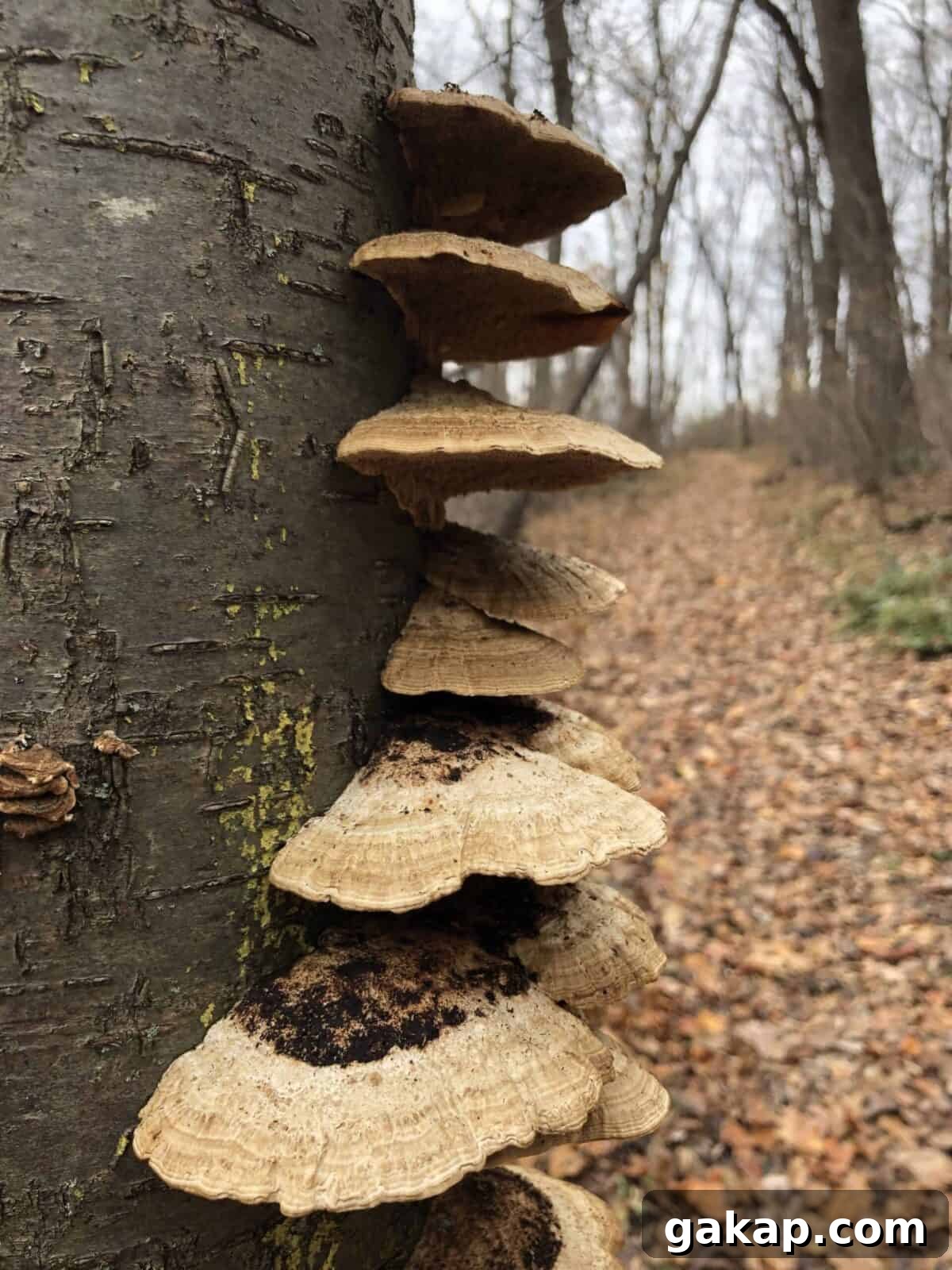
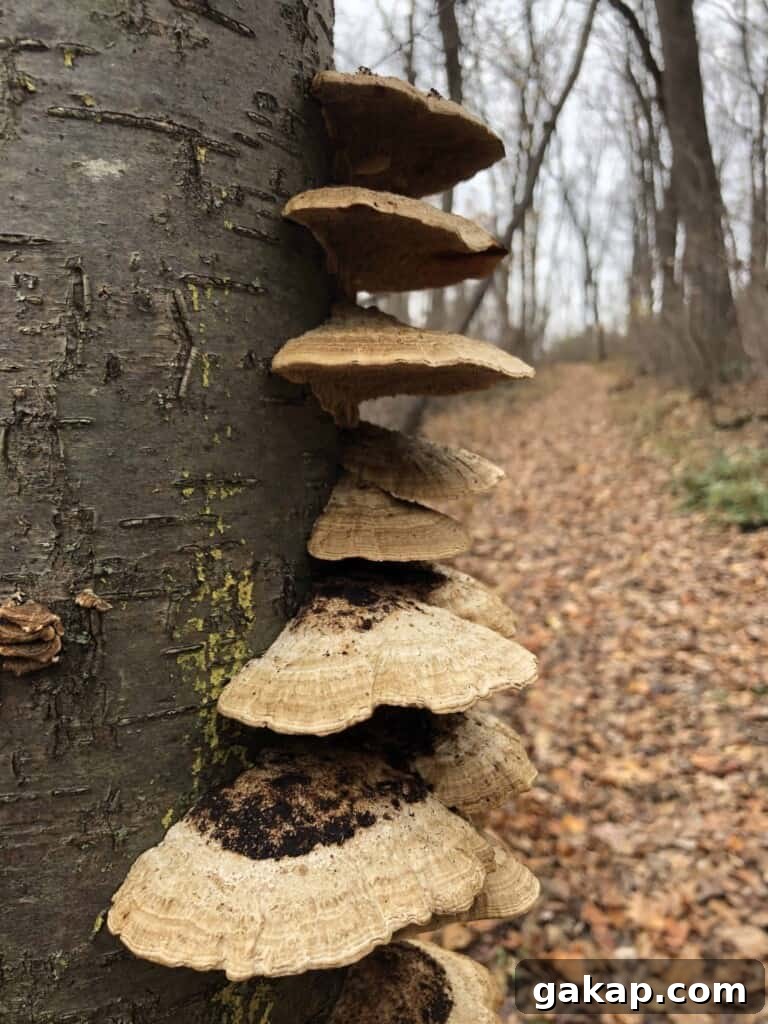
I was walking this morning through the nearby woods on a crisp, chilly fall day. My eyes are usually tuned to spotting birds, but with the leaves gone the mushrooms growing on hardwood stood out clearly. Mushrooms have always fascinated me.
When I was a child in Switzerland, my father took me mushroom hunting until the Chernobyl disaster in 1986 changed how people thought about foraging.
Although the reactor explosion occurred roughly 920 miles northeast of my home, European authorities issued long-term advisories about consuming wild mushrooms out of concern for contamination. Decades later, caesium-137 can still be detected in some mushrooms and in the wildlife that feed on them. That persistence reflects how fungi interact with and retain substances in their environment.
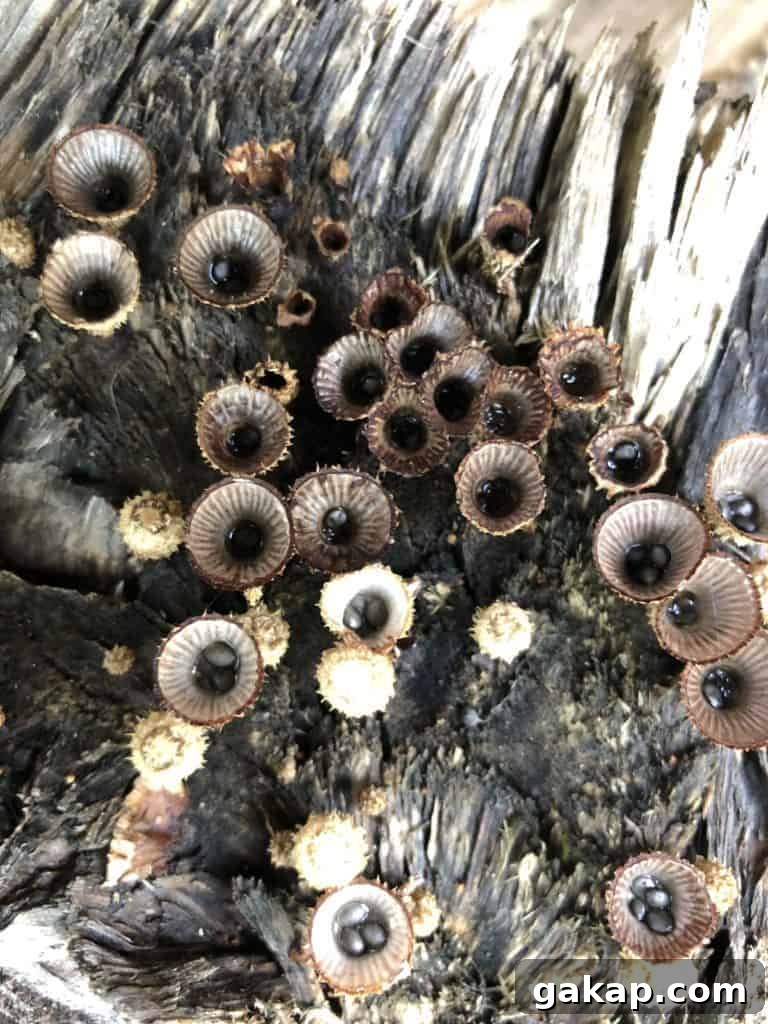
Mushrooms are unusual organisms: neither plant nor animal. They do not rely on sunlight and lack chlorophyll. What we commonly call a mushroom is the fungi’s fruiting body—the reproductive structure—while most of the organism lives hidden as a network of filaments in the soil or inside decaying wood. These filaments release enormous numbers of spores; for example, a giant puffball (Calvatia gigantea) can contain billions of spores.
Fungi are largely saprophytes, meaning they feed on dead or decaying material. In doing so they recycle organic matter and contribute essential nutrients back to the soil. Without their decomposing work, many plants and trees would struggle to thrive, and the ecosystems that depend on them would be less productive.
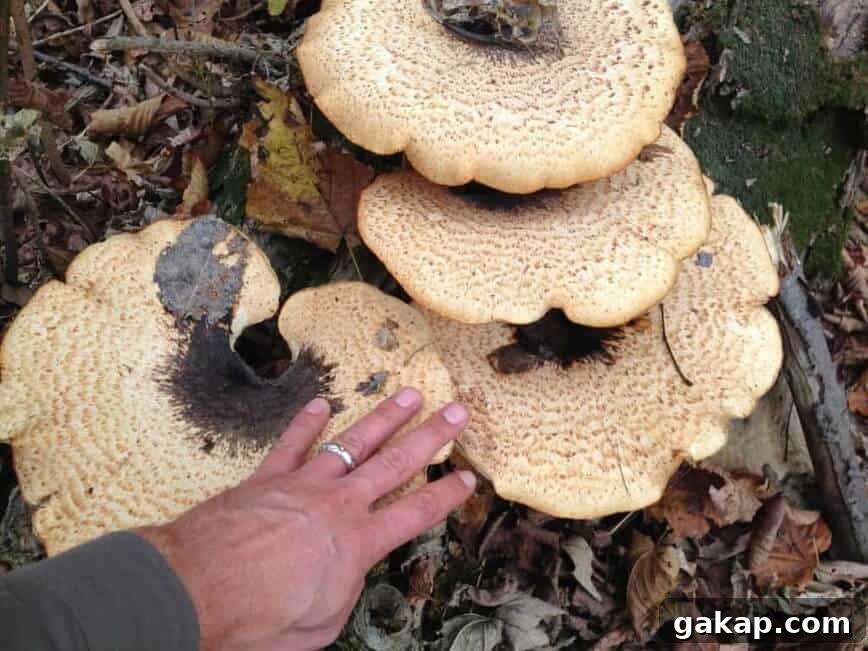
The next time you notice a mushroom, take a moment to appreciate it. Their forms, life cycles, and roles in ecosystems are endlessly intriguing. Below are a few key facts to spark your curiosity. In spring, I plan to head out again to forage and cook some of the edible species this region offers—carefully and knowledgeably.
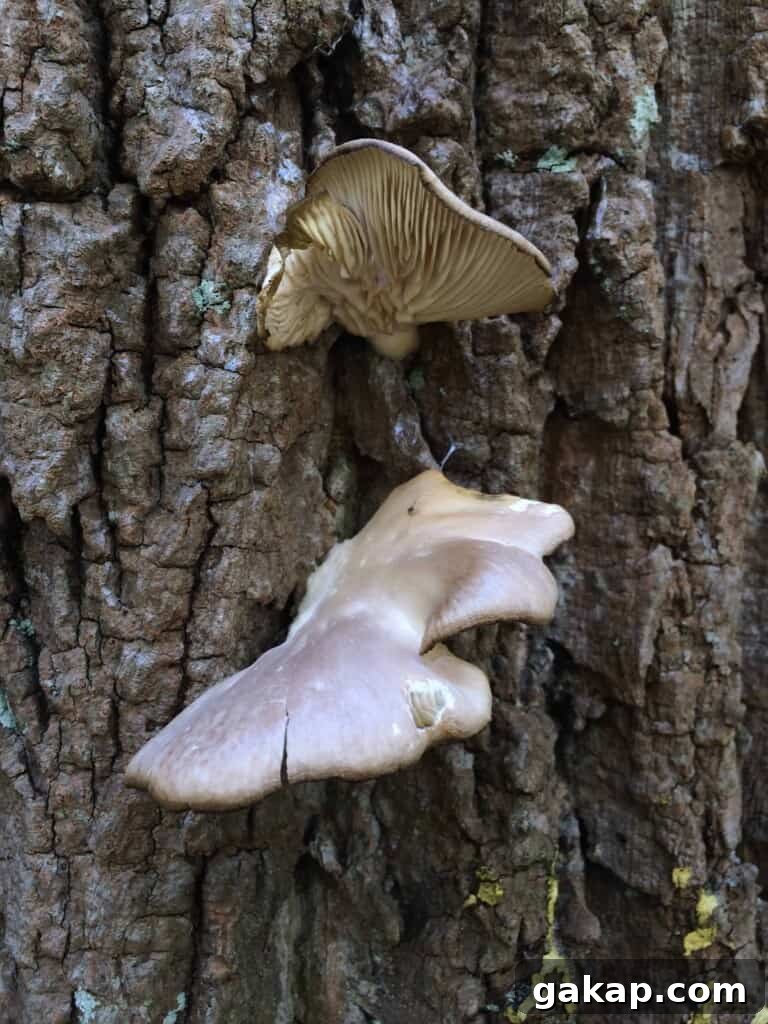
Facts
- Fungi are ubiquitous in nearly every ecosystem.
- We inhale thousands—often tens or hundreds of thousands—of spores each day.
- Fungi make up a significant portion of Earth’s biomass.
- Only a small fraction of fungal species have been formally identified.
- Some fungal networks are among the largest living organisms on the planet.
- Fungi provide powerful medicines and, at times, cause serious diseases.
- They break down a wide range of materials, even complex hydrocarbons like petroleum.
- Many species are delicious and edible, while a few are dangerously toxic, so identification matters.