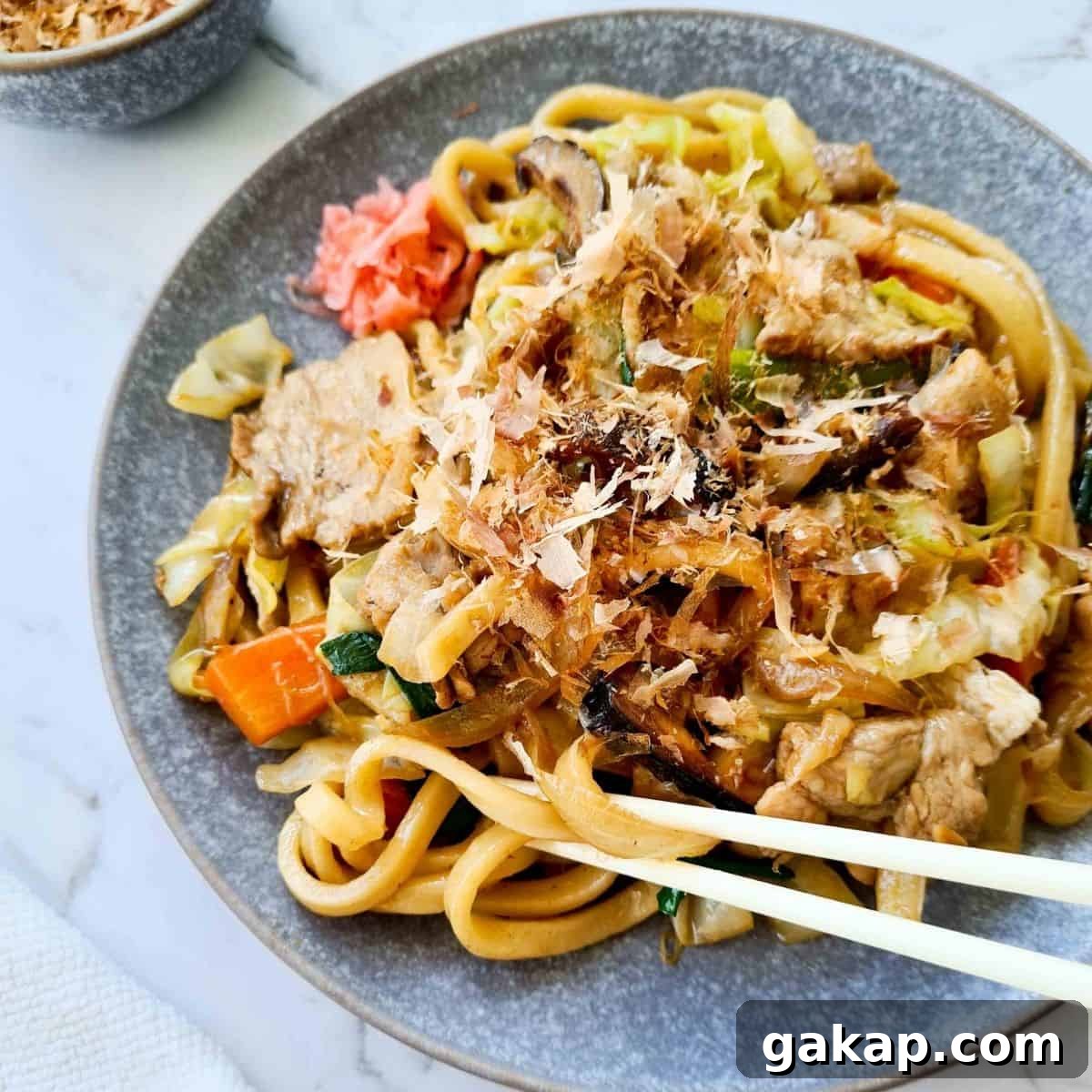
This authentic yaki udon is an easy, budget-friendly meal that comes together in just over 20 minutes. The trick is using frozen udon for the best chewy texture. Yaki udon — Japanese stir-fried udon — is a comforting street-food classic served across Japan and beyond.
If you enjoy quick noodle dishes, try my chicken noodle stir fry, Chinese pork mince noodles or beef noodle stir fry. Browse my collection of noodle recipes for more ideas.
What is yaki udon?
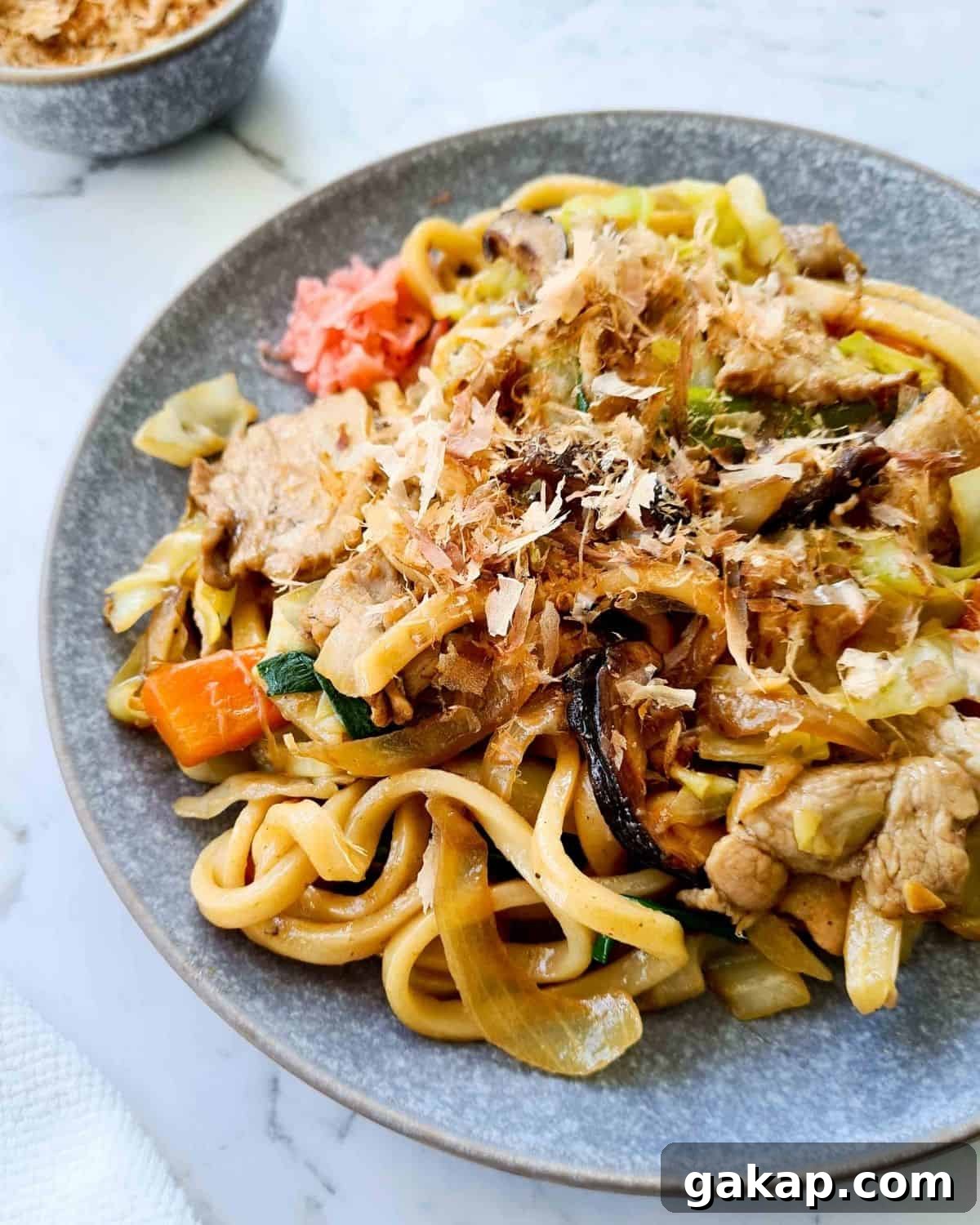
Udon are thick, chewy Japanese wheat noodles used in soups, stir-fries and topped dishes. Yaki means cooked over direct heat — think pan-fried or grilled. Put together, yaki udon refers to stir-fried udon noodles, a popular street-food dish.
This quick stir fry is cooked on high heat with economical vegetables and your choice of protein — pork belly, chicken, beef or firm tofu all work well.
Compared to a typical noodle stir fry, yaki udon differs in a few ways:
- Udon replaces Hokkien or other noodles. Udon is chewier and holds up better when stir-fried.
- Mirin is used in place of shaoxing wine for a mild sweetness and tang.
- Bonito flakes and pickled red ginger are common finishing touches that give an authentic Japanese street-food flavor.
Ingredients
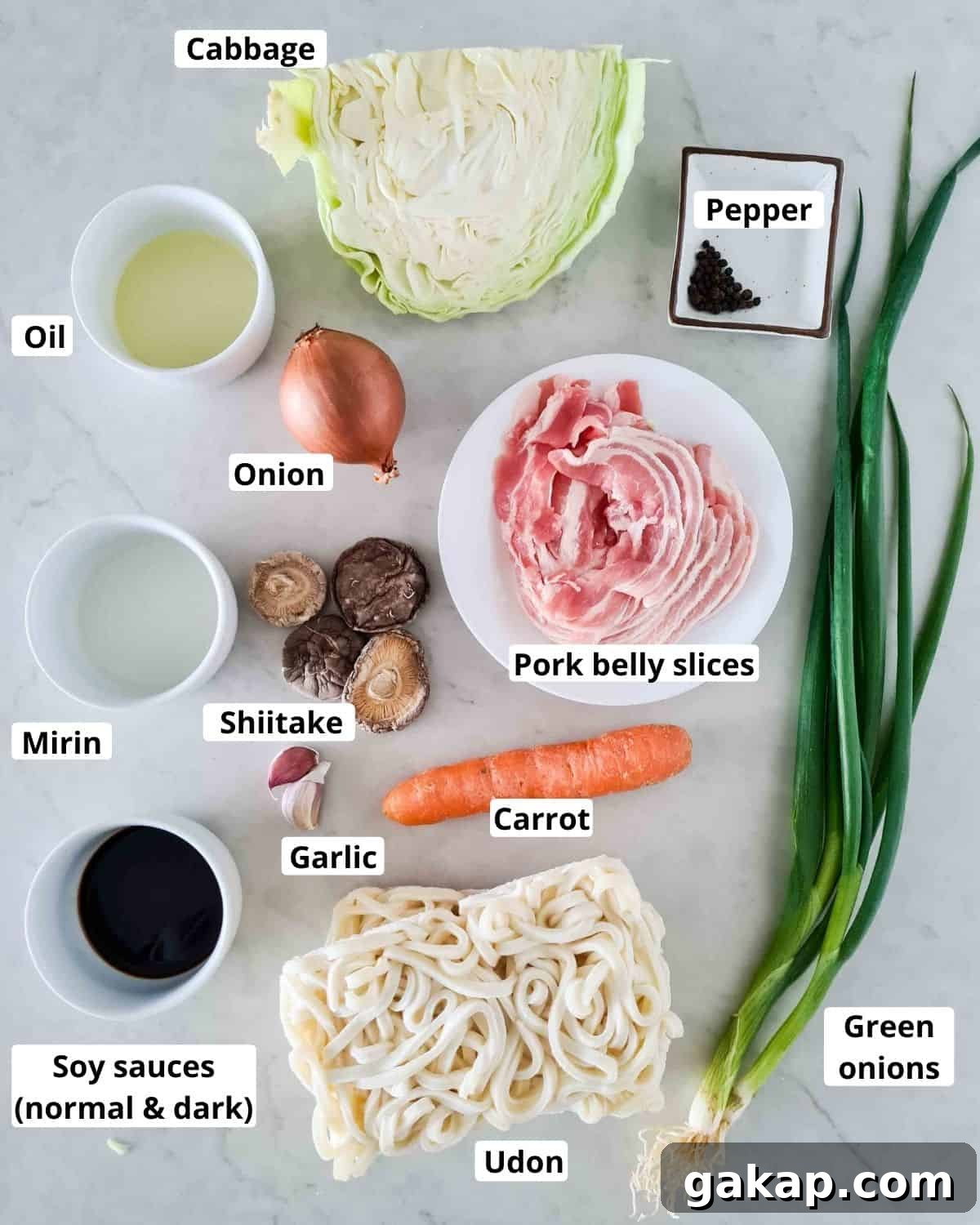
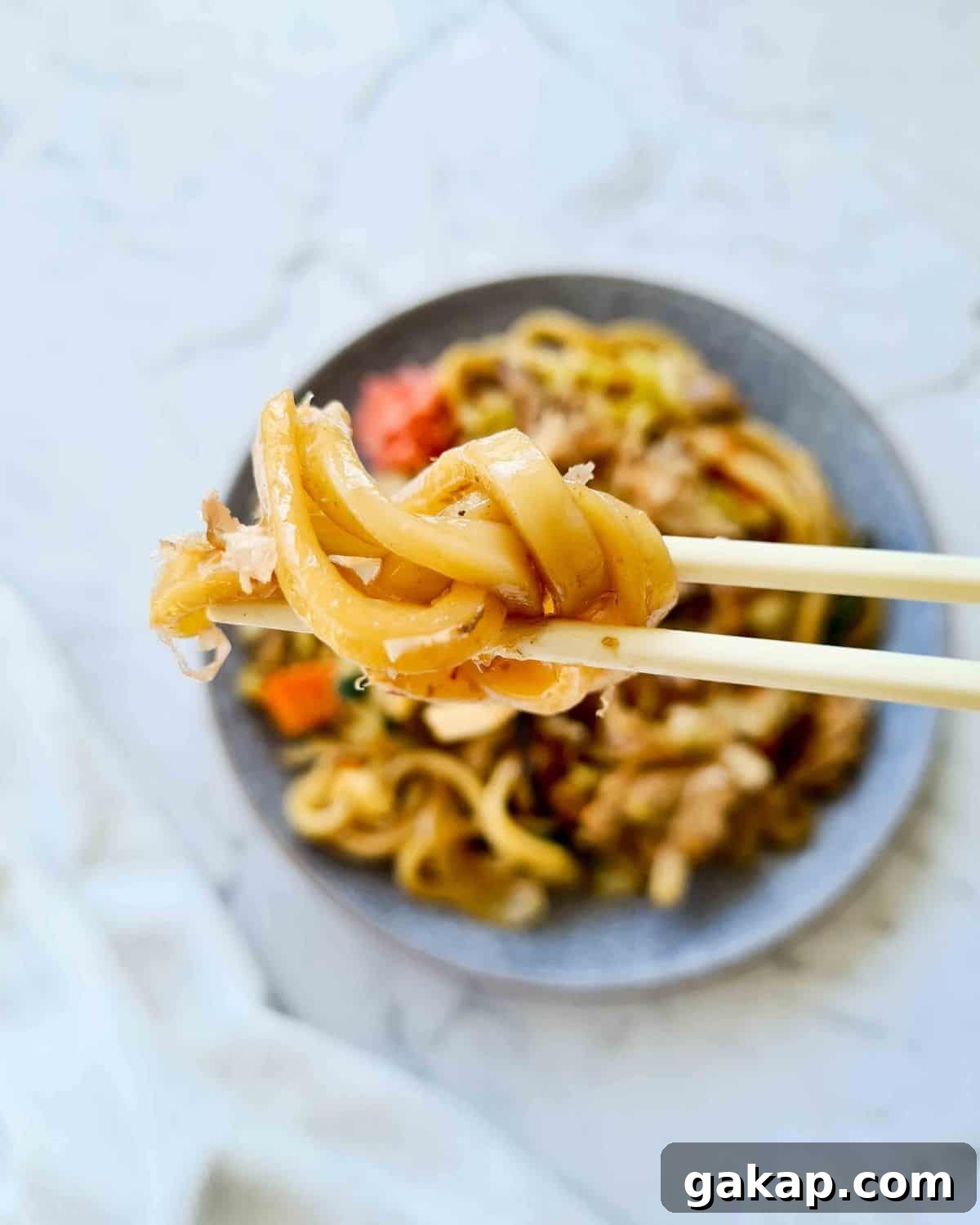
- Udon — Use frozen pre-cooked udon for the best texture. Frozen udon is chewier, longer and withstands stir-frying better than vacuum-packed supermarket versions.
- Mirin — A sweet Japanese cooking wine with low alcohol. Substitute with sake, shaoxing wine or dry sherry if needed.
- Shiitake mushrooms — Add deep umami flavor. Dried shiitake are more intense but require 15–20 minutes soaking; fresh shiitake save time.
- Dark soy sauce — Used along with regular soy sauce for richer color and umami with less salt.
- Pork belly slices — Traditional and flavorful; substitute with chicken, beef or tofu to suit your diet.
Cooking step by step
The method is straightforward but fast-paced, so prep everything before you start. Stir-frying moves quickly, and having ingredients within reach makes the process smooth.
Prepare the ingredients
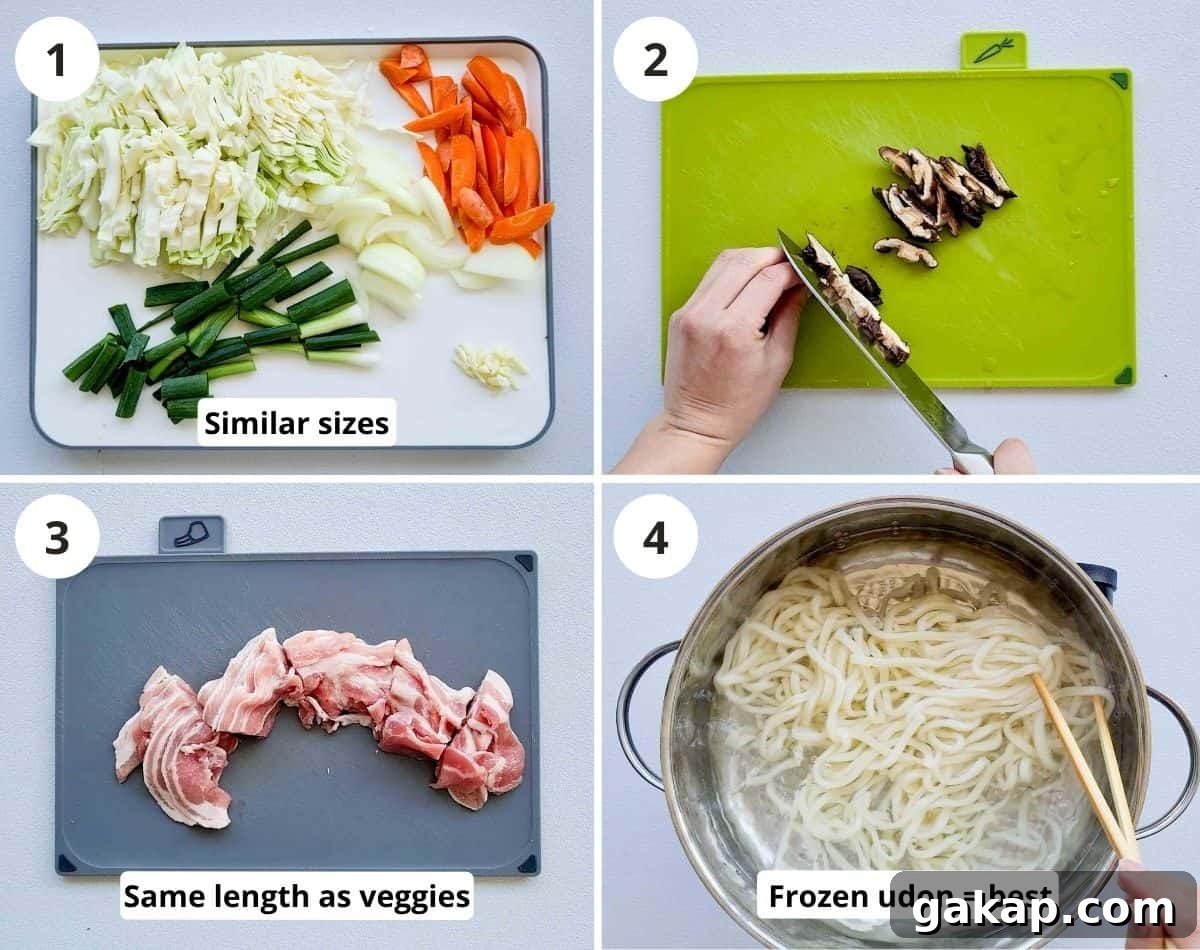
Slice vegetables and protein into similar sizes for even cooking. If using dried shiitake, soak them in hot water for 15–20 minutes before slicing. Loosen frozen udon according to package directions — typically a quick dip in boiling water and a gentle separate with chopsticks or a fork, then drain.
Stir fry
Heat a large frying pan or wok and add oil. Start by sautéing sliced shiitake until lightly golden — this develops their flavor. Add garlic, onions, the white parts of the green onions and carrots; cook briefly, then add cabbage and stir-fry until slightly softened.
Push the vegetables to the sides of the pan to create space in the center and add the remaining oil. Stir-fry the pork belly on high heat in the cleared center to get caramelization, then add seasoning: black pepper, dark soy sauce, regular soy sauce and mirin.
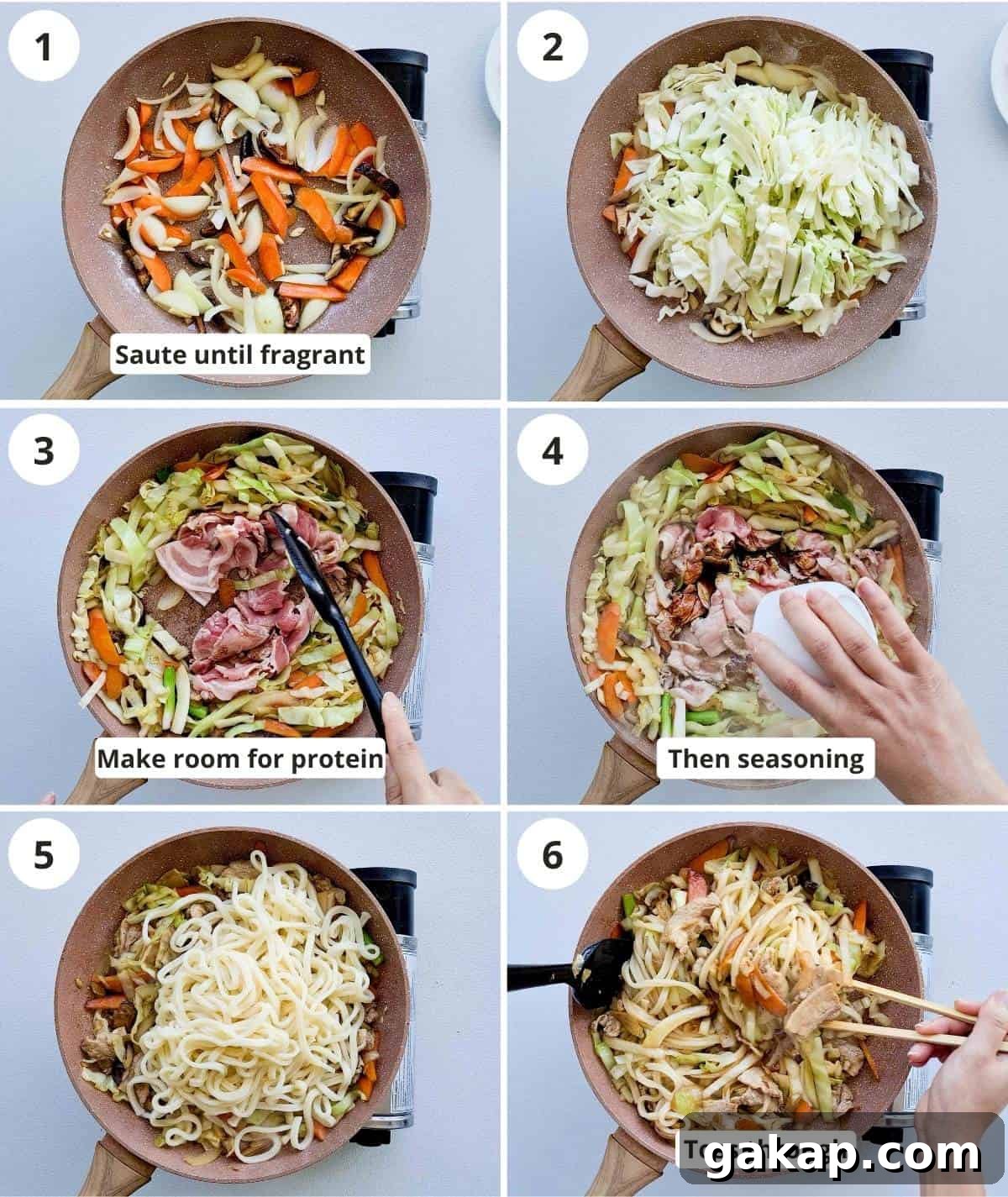
After a minute, add the udon and the green parts of the green onions. Toss everything on high heat for 2–3 minutes so the flavors combine and the noodles pick up color. Taste and adjust seasoning if needed.
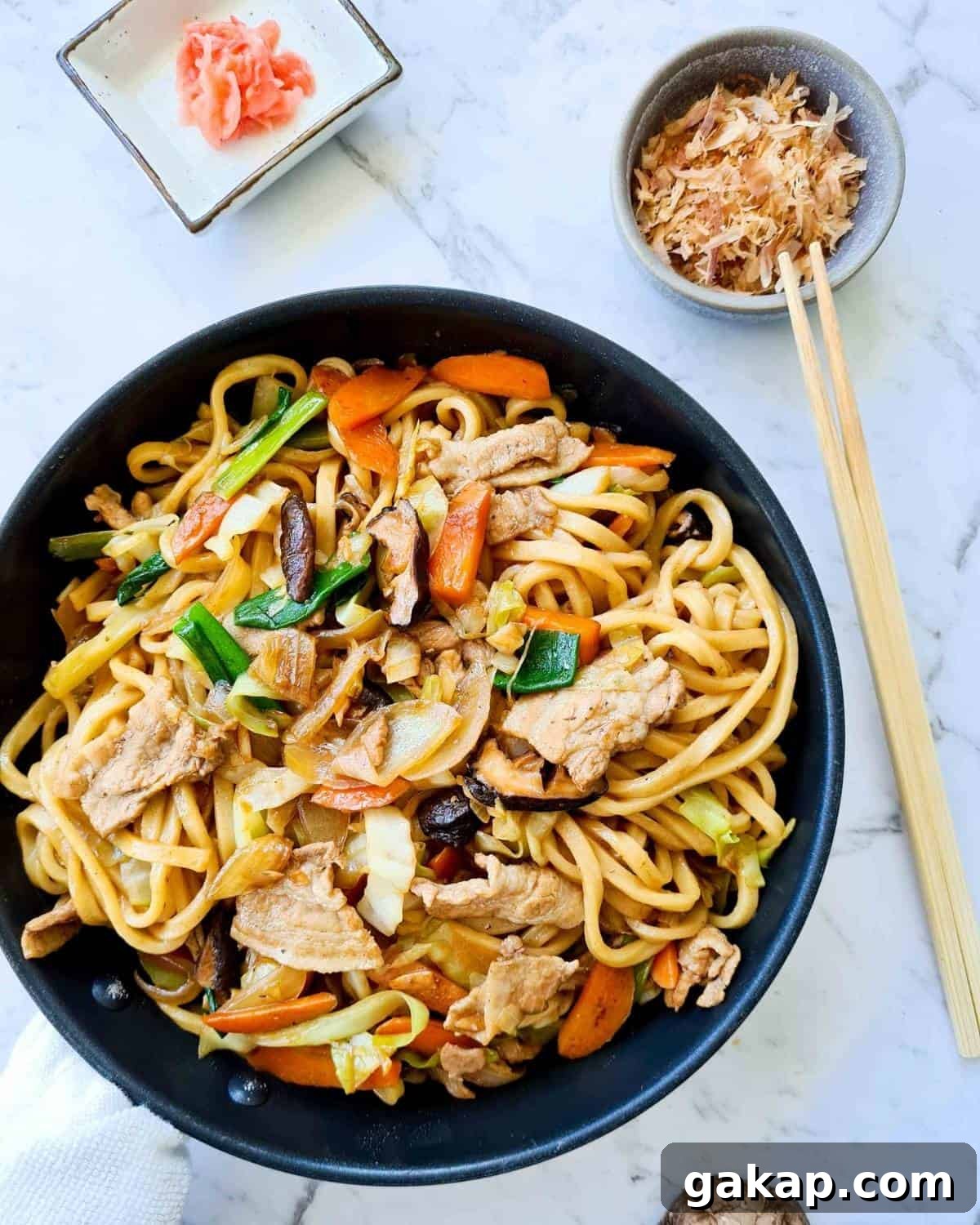
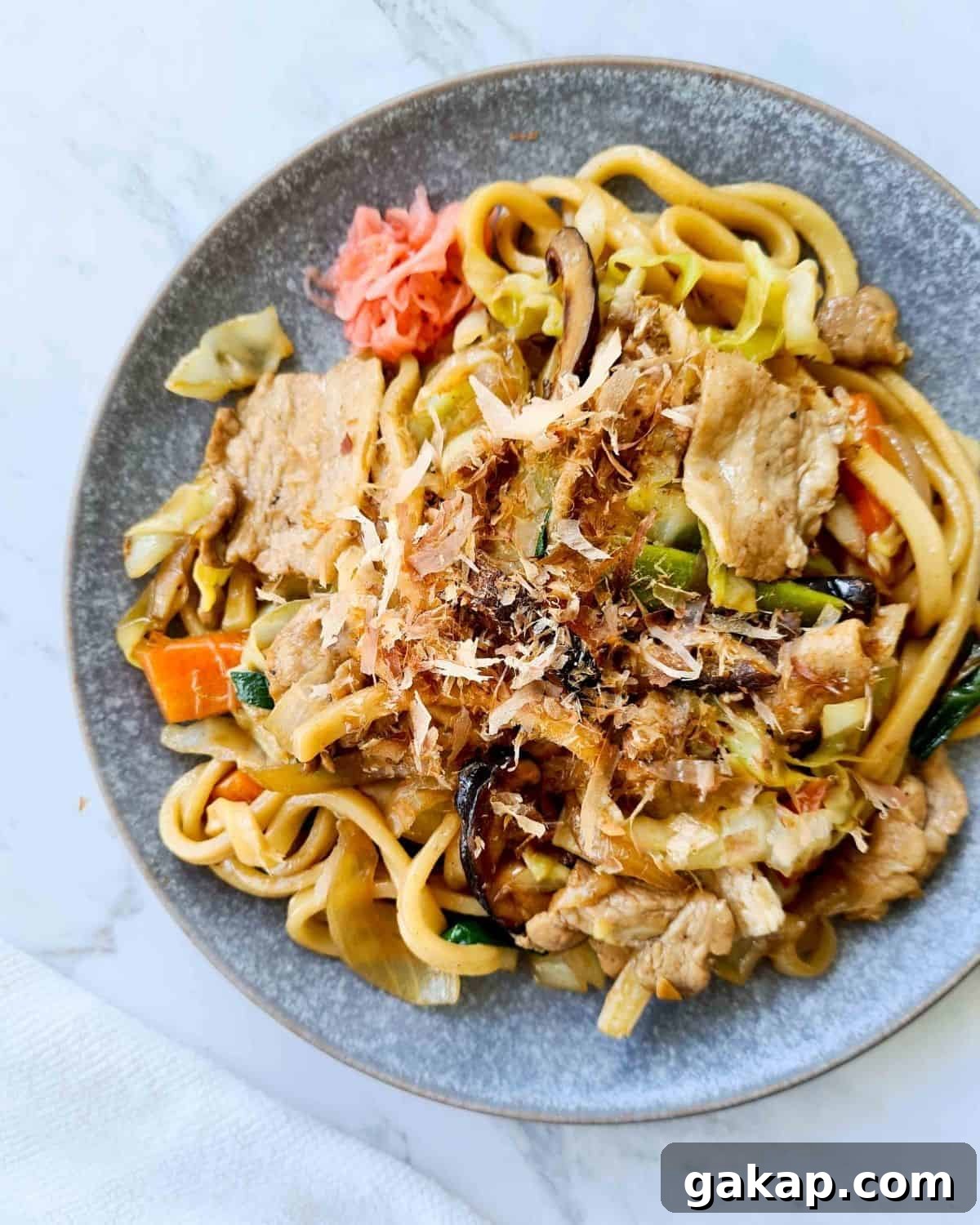
Serve immediately with bonito flakes and pickled red ginger for an authentic finish. A sprinkle of sesame seeds and a drizzle of sesame oil are nice additions.
Bonito flakes (katsuobushi) are ultra-thin, smoked skipjack tuna flakes that add a smoky umami punch; they also move slightly when placed on hot food, giving a playful “dancing” effect. Pickled red ginger (gari) is used to refresh the palate. Both are commonly available in Asian grocery stores.
Pro tips for making this perfect every time
- Use a large pan or wok so the pork belly can sizzle without crowding — direct heat gives better caramelization.
- Have all ingredients prepped and nearby before you start.
- Use frozen udon for the best bite and durability while stir-frying.
- Toss noodles with two spatulas or a pair of chopsticks to evenly distribute seasoning and ingredients.
- Cut ingredients to similar sizes to ensure uniform cooking.
Good to know (FAQs)
Yes. Yaki udon combines vegetables, protein and carbohydrates using whole ingredients. For fewer calories, swap pork belly for lean chicken or firm tofu. This recipe yields two generous servings or three moderate portions.
Almost any vegetables from your fridge will work — celery, button mushrooms, spinach and more. Adjust seasoning when adding extra vegetables.
Leftovers/freezing
Store leftovers in an airtight container in the fridge for 3–4 days. Freeze for up to 6 months, though quality declines over long storage. To reheat from frozen, thaw in the fridge overnight and warm in a pan or microwave.
Made this recipe? Share your thoughts in the comments — I’d love to hear how it turned out.
Happy cooking and eating! – Gen
📖 Recipe
Yaki udon (Japanese stir fried udon noodles)
Ingredients
- Udon — 500g (frozen or fresh; frozen recommended)
- Pork belly slices — 150g (or substitute chicken, tofu or beef)
- Cabbage — 3 cups, finely sliced
- Carrot — 1, halved and thinly sliced
- Shiitake mushrooms — 6, sliced (fresh or soaked dried)
- Brown onion — 1, finely sliced
- Green onions — 2, cut into 5cm pieces, white and green parts separated
- Garlic — 2 cloves, minced
- Oil — 2 tablespoons
Seasoning
- Soy sauce — 1 tbsp
- Dark soy sauce — 1 tbsp
- Mirin — 1 tbsp (or sake, shaoxing wine, dry sherry)
- Black pepper — to taste
To serve (optional but recommended)
- Bonito flakes (katsuobushi)
- Japanese pickled ginger (gari)
Instructions
- Prepare udon according to packet instructions.
- Heat 1 tbsp oil in a large frying pan or wok on high heat. Add shiitake and cook until lightly golden, about 1 minute.
- Add onion, white parts of green onions, garlic and carrot. Stir-fry 1 minute, then add cabbage and cook 3–4 minutes until softened.
- Push vegetables to the rim, add remaining 1 tbsp oil to the center and stir-fry the pork belly on high heat for about 1 minute. Add soy sauces, mirin and black pepper, then mix with the vegetables.
- Add udon and green parts of green onions. Toss for 2–3 minutes to combine and heat through.
- Serve immediately with bonito flakes and pickled ginger.
Notes
Note 1. Frozen udon offers superior texture and durability when stir-frying compared to vacuum-packed fresh udon.
Note 2. Dried shiitake have stronger flavor but need soaking; fresh shiitake save time.
Note 3. Dark soy sauce gives color and umami with less salt.
Note 4. Mirin is a slightly sweet Japanese cooking wine; substitute with sake, shaoxing or dry sherry if needed.
Note 5. Bonito flakes add smoky umami and pickled ginger refreshes the palate.
Leftovers/freezing: Refrigerate 3–4 days or freeze up to 6 months; thaw overnight in the fridge before reheating.
Nutrition
Carbohydrates: 80.4 g |
Protein: 31.5 g |
Fat: 31.3 g
More quick and easy Asian dinners
-
Thai Basil Fried Rice
-
Chinese Cashew Chicken
-
Marinated Chicken stir fry with Green Beans
-
Chinese sausage fried rice